How to Measure an Oversized Hoodie for Development
Oversized describes a proportion, not a single measurement or a larger size label. A hoodie can be wide and cropped, long with a dropped shoulder, or roomy without an exaggerated sleeve. Translate the intended shape into related dimensions so the factory does not create volume in the wrong places.
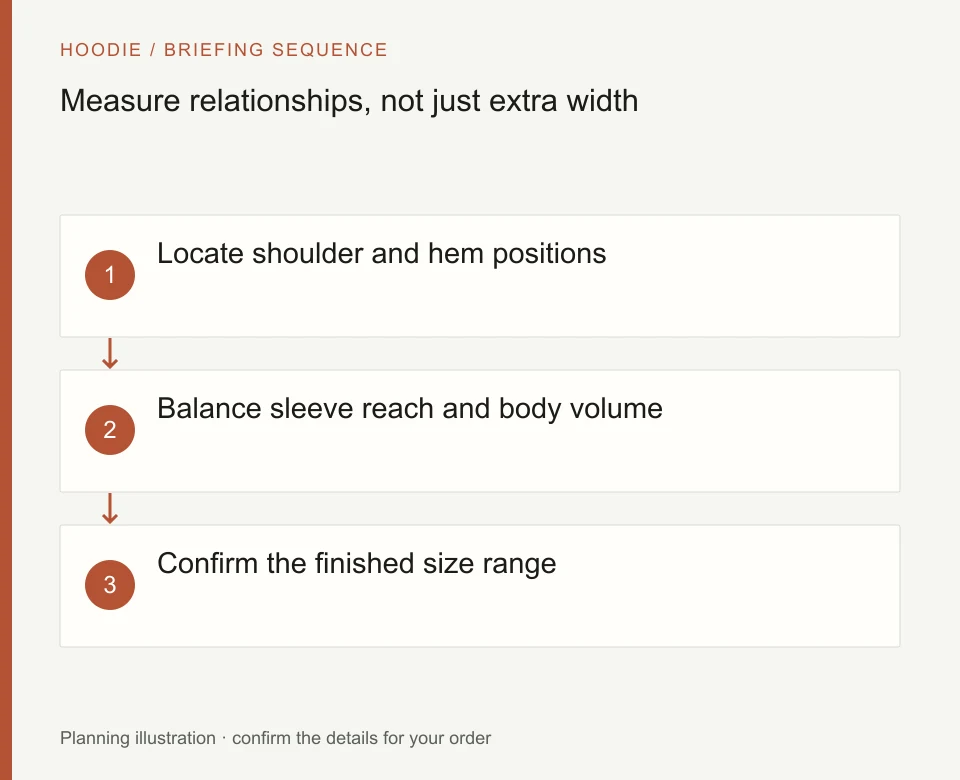
At a glance
Swipe the table sideways to compare both columns →
| Decision | What to specify | What to verify |
|---|---|---|
| Shoulder and sleeve | Define endpoints and combined reach. | Check the worn cuff position. |
| Chest and hem | Record body width and relaxed rib opening. | Decide whether the body should blouse or hang straight. |
| Length and hood | State hem position and hood-up behavior. | Review the intended fabric after finishing. |
Choose reference points that explain the volume
Start with a worn reference and a flat garment diagram. Define chest width, shoulder width, body length, armhole, sleeve length, cuff and hem opening. State the base size and units. A flat chest measurement should not be confused with body circumference, and a garment sold as large by another brand is not a reproducible specification for your own oversized fit.
Identify where the garment should sit: shoulder seam below the shoulder point, hem at a chosen body position and cuff at the intended wrist position. Describe these relationships alongside measurements. This helps the pattern discussion when the sample technically matches the chart but does not create the silhouette you meant. Do not correct that situation by increasing every measurement indiscriminately.
Review connected dimensions on the body
Measure shoulder and sleeve using the same agreed endpoints each time. A drop shoulder moves the sleeve attachment outward, so the sleeve's separate length may need a different balance than on a regular shoulder. Check the total reach in a worn review and observe how the sleeve falls. Record whether the issue is reach, volume, armhole shape or cuff position.
Assess body width with hem rib and body length. A narrow rib can gather a wide body into a bloused shape; a more open hem can let the same body hang straighter. For a cropped hoodie, check what happens when the wearer raises their arms and when the hood is up. These observations clarify design intent without pretending one proportion is universally correct.
Approve in the intended fabric and size range
Fabric structure and finishing influence how the extra volume hangs. A soft loopback and a firm brushed fabric may not present the same shape at the same nominal weight. Use a representative material for final fit approval and document any earlier substitute. Measure after the intended production finish so the chart describes the garment the buyer will actually receive.
After base fit approval, review grade rules and relevant size-set samples. Keep the oversize character consistent without assuming every dimension scales equally. Consider pocket position, hood balance and graphic placement across the range. Archive the approved measurement method with the chart; otherwise a reorder can recreate the numbers using different endpoints and still produce a noticeably different hoodie.
Send these details together
- Worn silhouette reference and base size
- Point diagrams for shoulder, sleeve and chest
- Body length and relaxed hem-rib dimensions
- Representative fabric and finished sample
- Approved grading and placement across selected sizes
Use this checklist to prepare your own order brief. Materials, processes, acceptance criteria and any applicable product requirements need order-specific confirmation; this guide is not a test report or availability guarantee.
Prepare a quote briefThe RFQ form prepares a WhatsApp message for you to review. For files, email sales@hoodiemanufacturerchina.com.
Questions before sampling
What are your MOQ, sample time and bulk lead time?
MOQ is 100 pcs. Samples take 7 days. Bulk production lead time depends on order quantity.