What belongs in a cropped hoodie manufacturer RFQ?
Start with Body length, Hem rib height, Shoulder drop, Sleeve length. Add the quantity by color and size, destination country and required date.
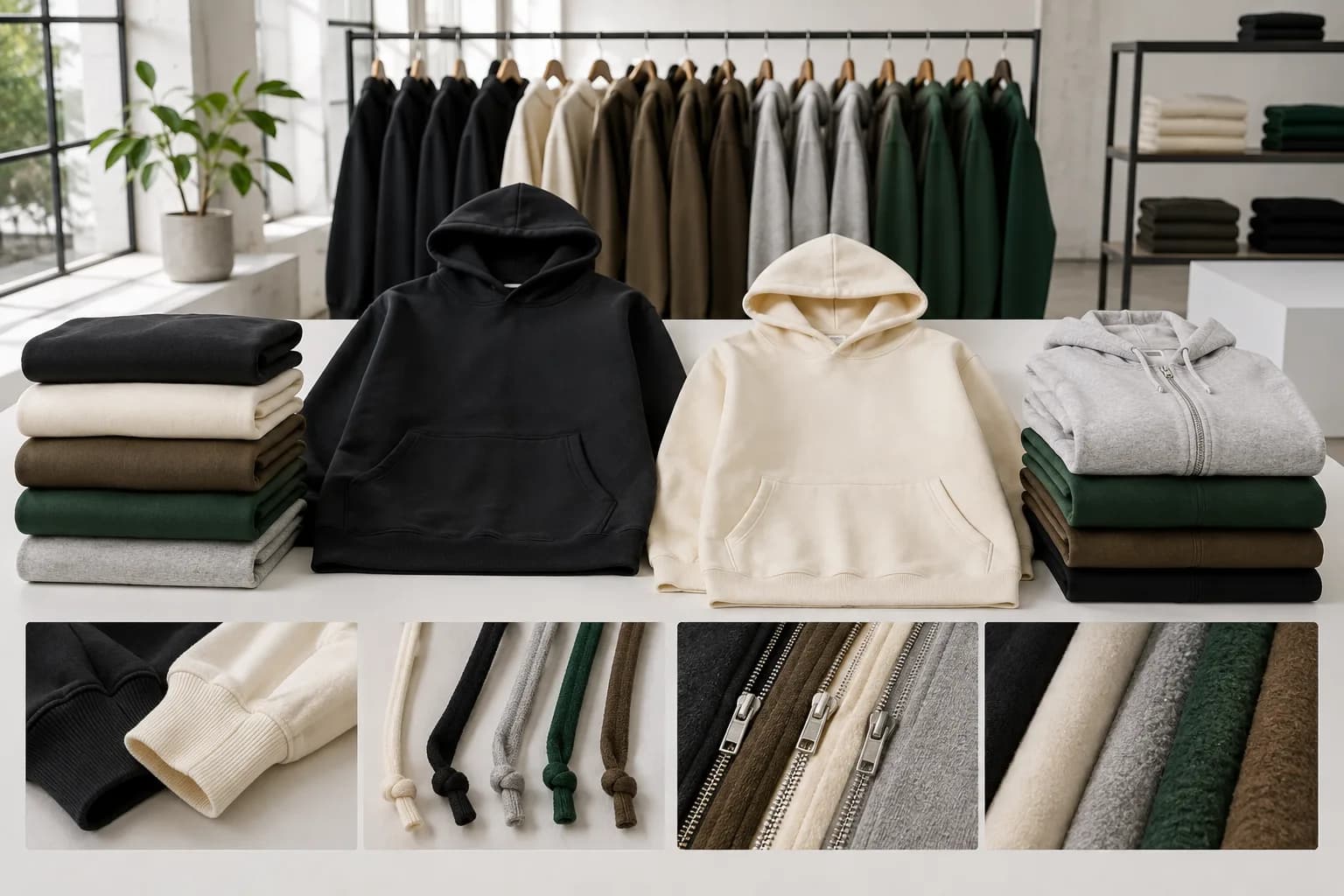
Cropped hoodies need proportion control because a short body can change sleeve balance, hem tension and overall silhouette.
Control body length, shoulder drop, sleeve volume, rib height, hood size and shrinkage through sampling.
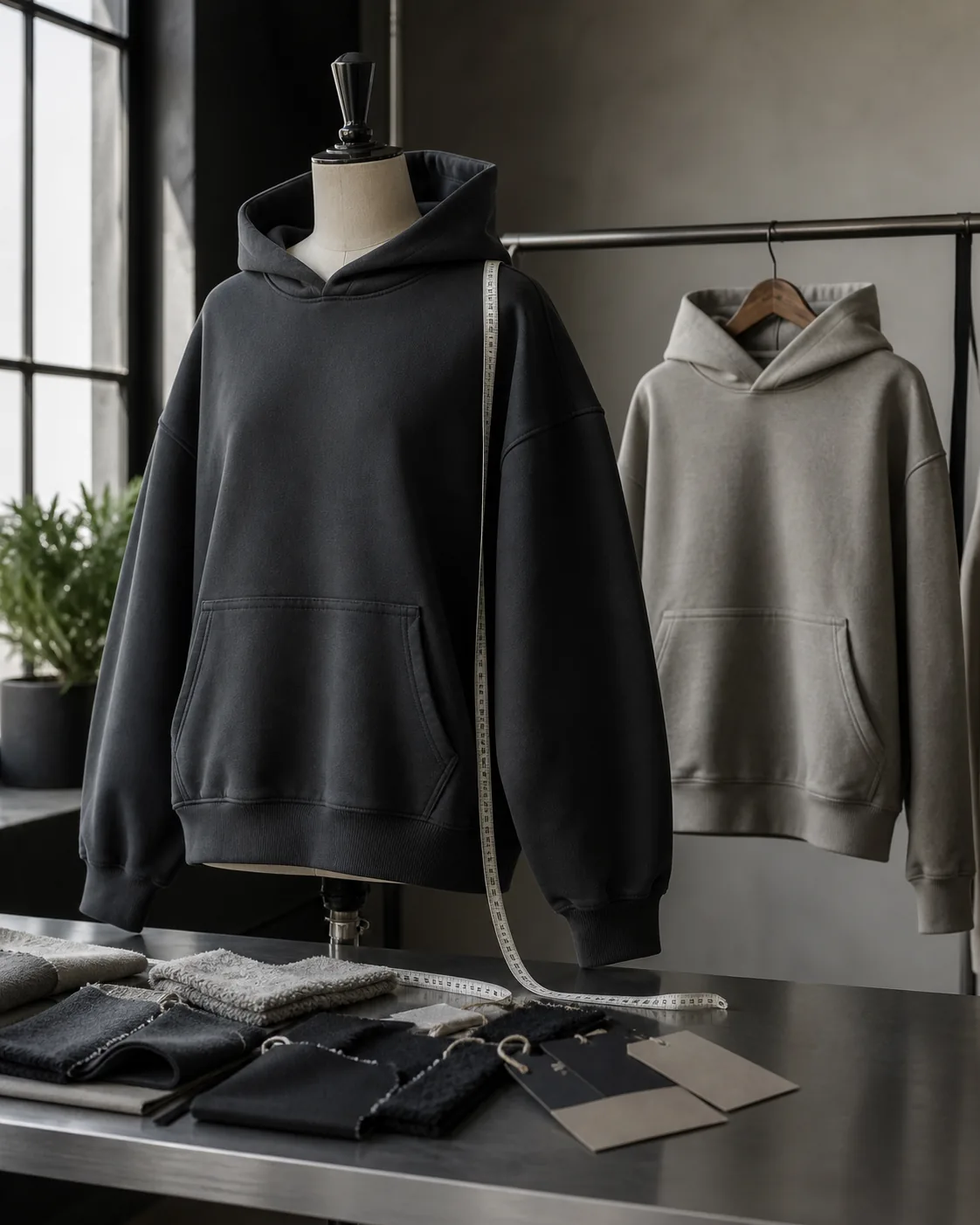
Brushed fleece
Drop shoulder, sleeve volume, cropped or long-body proportion.Fit sample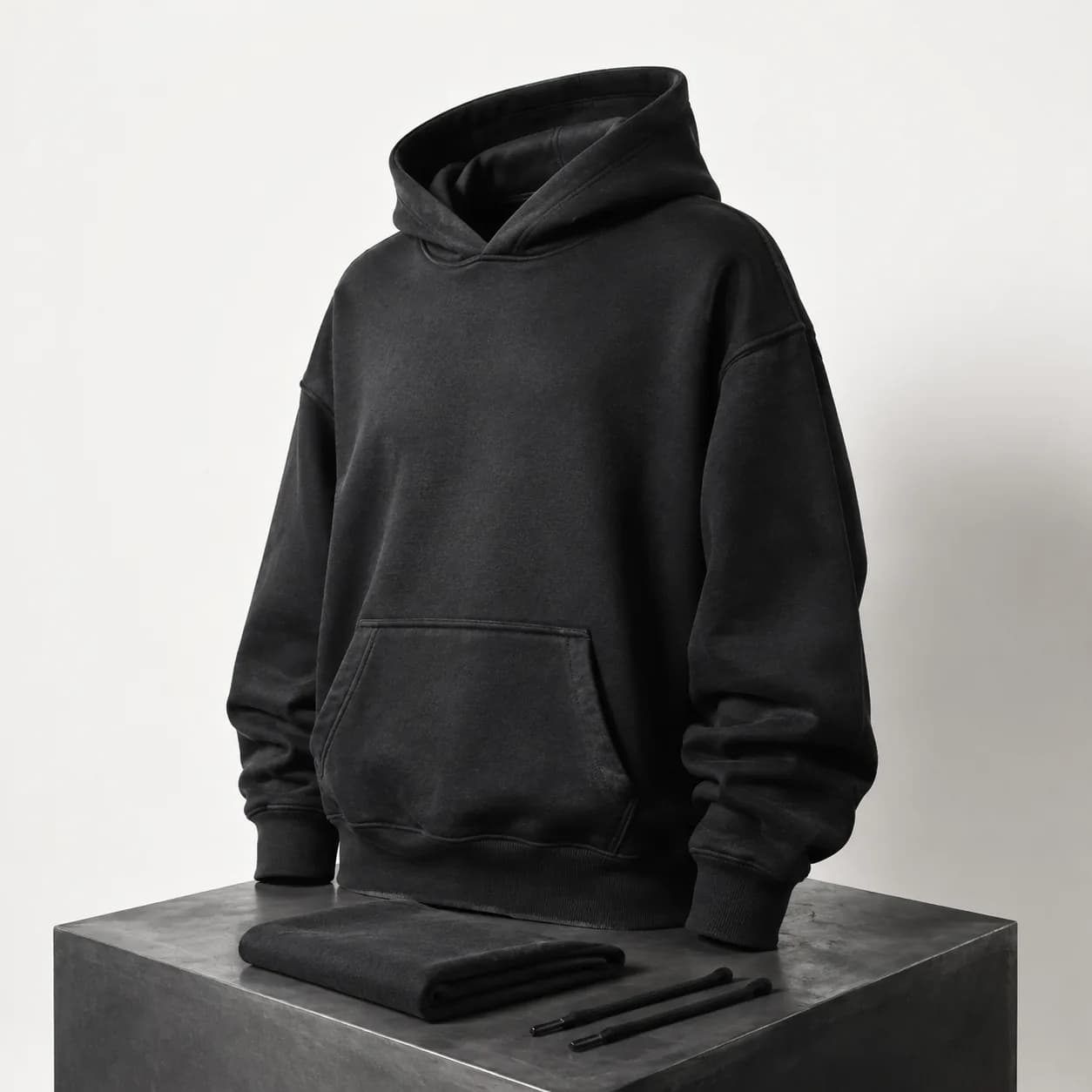
420-500 GSM fleece
Oversized shoulders, double hood, rib tension and shrinkage checks.Sample first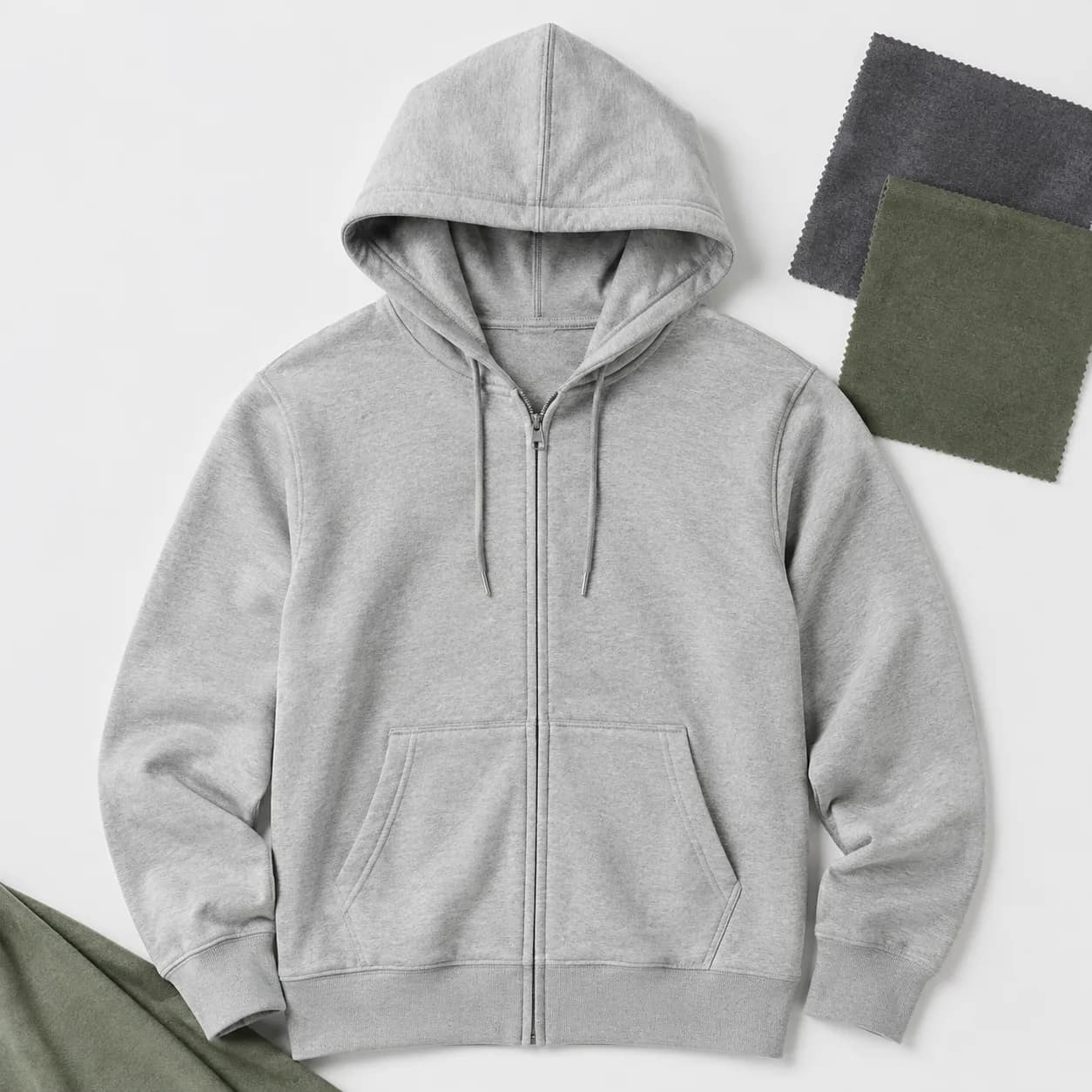
Fleece or French terry
Zipper, drawcord, labels, embroidery and packing details.Quote by trim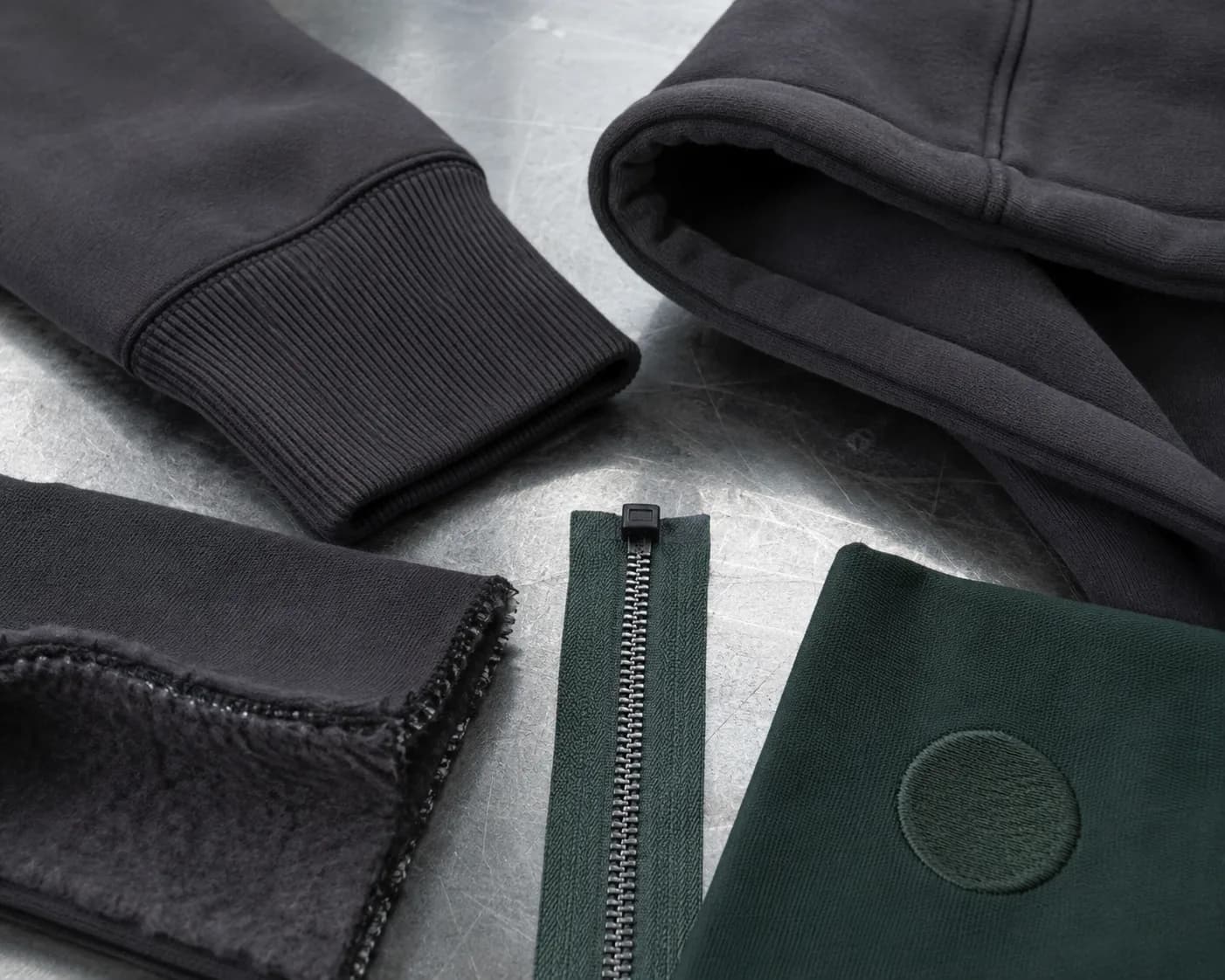
Print and embroidery
Puff print, applique, screen print and wash durability review.Artwork neededThese are the details a factory needs before discussing MOQ, sampling, lead time and production scope.
Start with Body length, Hem rib height, Shoulder drop, Sleeve length. Add the quantity by color and size, destination country and required date.
The sample should resolve Boxy cropped fit, Wide rib hem, No drawcord hood and record the approved measurements, materials, trims and finish before bulk.
MOQ is 100 pcs. Samples take 7 days. Bulk production lead time depends on order quantity.
Side length balance, Hem recovery, Fit sample photos, Post-wash measurement should be compared with the approved sample and packing requirements before release.
A cropped hoodie brief should start with a measurable body length rather than a general reference such as short or boxy. State whether length is measured from the high shoulder point or another agreed location, and whether the measurement includes the finished hem or rib band. Add chest width, shoulder width, armhole depth, sleeve length and hem opening to establish the complete silhouette. Reference photographs help communicate direction, but they do not replace a measurement chart. For each size, define the intended length progression so the crop does not become unexpectedly short or long across the range.
Hem construction changes both the appearance and the usable length of the garment. A turned hem can support a straight opening, while a rib band may draw the body inward and create a bloused effect above the waist. A raw-edge treatment needs a clear agreement on edge appearance and how the selected fabric may behave during wear and washing. Specify hem depth, stitch appearance and opening measurement, then review them together on the sample. If the design includes a kangaroo pocket, confirm that its lower edge leaves enough room for hem construction without crowding the front panel.
Choose fleece GSM alongside construction and composition, not as a standalone quality score. A heavier fabric may give the cropped body more structure, but it can also add bulk at the hem, pocket corners and hood seam. A lighter option may fall closer to the body and change the appearance of an oversized width. Specify whether the inside should be brushed or loopback, the desired face texture and the intended hand feel. Where a reference garment is available, use it to discuss drape and thickness before selecting available materials that suit the design and purchasing requirements.
Fabric behavior matters because a small change in finished length can be noticeable on a cropped garment. Discuss expected dimensional change and the proposed care method during development, and agree on any evaluation needed before bulk approval. Do not assume two fabrics with the same GSM will recover, drape or take decoration in the same way. Rib selection also needs attention: its weight, stretch and recovery should suit the body fabric and the intended hem opening. Record the approved fabric reference, composition, target weight and color so purchasing and production teams are working from the same material specification.
An oversized cropped hoodie requires more than reducing the length of a standard oversized pattern. The relationship between chest width, shoulder drop and body length determines whether the garment looks intentionally boxy or simply shortened. A wide chest paired with a tight hem can gather fabric above the waist, while a wide straight hem can create a more open silhouette. Sleeve volume and cuff dimensions should support that choice rather than overpower it. Identify the intended wearer, layering use and preferred waist coverage in the brief, then review those points on a sample worn with representative bottoms.
Fit approval should include front, side and back views, plus basic movement such as raising the arms and reaching forward. These checks help reveal whether the crop rises more than intended, the hood pulls the neckline backward or the pocket placement interrupts the silhouette. Confirm how length and width change between sizes instead of applying one uniform grading rule to every measurement. For a unisex range, discuss the intended fit reference and size coverage explicitly. A documented sample review with marked measurements and photographs gives the pattern team clearer instructions than comments such as make it more oversized.
The shorter front and back panels leave less space for branding, so decoration should be planned before the pattern is finalized. Provide artwork dimensions and placement measurements from stable reference points, then define clearance from the neckline, armholes, pocket and finished hem. A graphic that fits the largest size may become crowded on the smallest size, especially when a rib band or deep turned hem reduces the usable area. Back graphics also need a review with the hood resting naturally. Confirm whether artwork size stays constant across the range or changes by size group, and document that decision.
Print, embroidery and wash treatments should be assessed as a combined process rather than separate visual choices. Dense embroidery can affect the drape of a soft cropped panel, while a large printed area may change its hand feel. If the design calls for a washed appearance, clarify the target shade, surface effect and acceptable visual variation using an approved reference. The order of washing and decoration can influence the final result, so agree on the intended sequence during development. Review labels, trims and any exposed edges as well, particularly where the treatment may alter their appearance or the finished measurements.
Start sampling with a brief that includes the measurement chart, fabric direction, hem construction, artwork and label requirements. Samples typically take around 7 days once the brief and materials are confirmed; changes to materials or design details may require a revised schedule. Use the sample to approve body length, width balance, fleece hand feel and decoration clearance together, since adjusting one can affect the others. Consolidate feedback into one revision list and identify which measurements or details need another review. Before bulk production, record the approved version and any agreed tolerances so the production team has a clear working reference.
The MOQ is 100 pcs. Confirm how your requested sizes, colors and decoration versions can be arranged within the order before finalizing the purchase. Bulk lead time depends on quantity, with material availability and approved process details also relevant to scheduling. For reorders, retain the approved measurement chart, pattern version, fabric reference, artwork files, placement instructions and packaging requirements. An approved sample is useful for comparison, but written records help prevent details from being lost between runs. Reconfirm material availability and review any proposed substitutions before proceeding, particularly where a change could affect crop length, hem behavior or shade.
Should the cropped hem have a rib? A rib band pulls the hem in and creates a bloused shape; a raw or hemmed edge hangs straight. Both are common. Should the sleeves be longer to balance the short body? Many cropped styles use slightly longer sleeves with a stacked cuff.
Cropped hoodies sell to both men's streetwear and unisex customers. Show the fit on models so customers understand the length.
Cropped hoodies pair well with high-rise sweatpants or wide trousers. Consider the outfit when choosing length.
Approve length on a model of average height.
Publish body length in the size chart so customers understand the crop.
Heavier fleece holds a boxy cropped shape; lighter fabric drapes and looks softer. Choose to match your reference.
Include references, quantity, fabric target, color count, logo files, packaging notes and the delivery window.