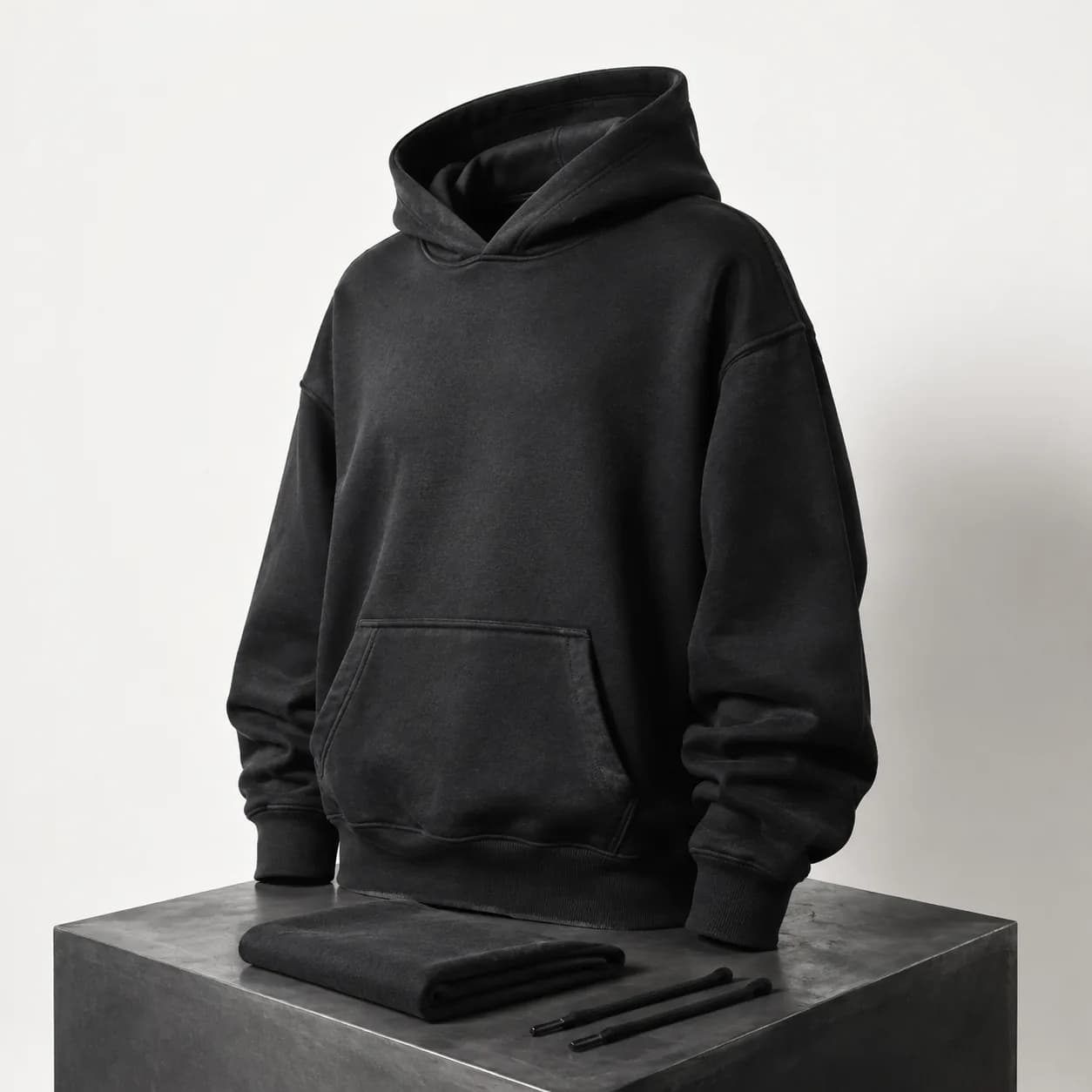
Body width versus length
Choose whether the body is boxy, cropped or long. Specify half-chest, hem and body length together so the silhouette is not left to a size label.
Review front and side fit photos with the hem in its natural position.
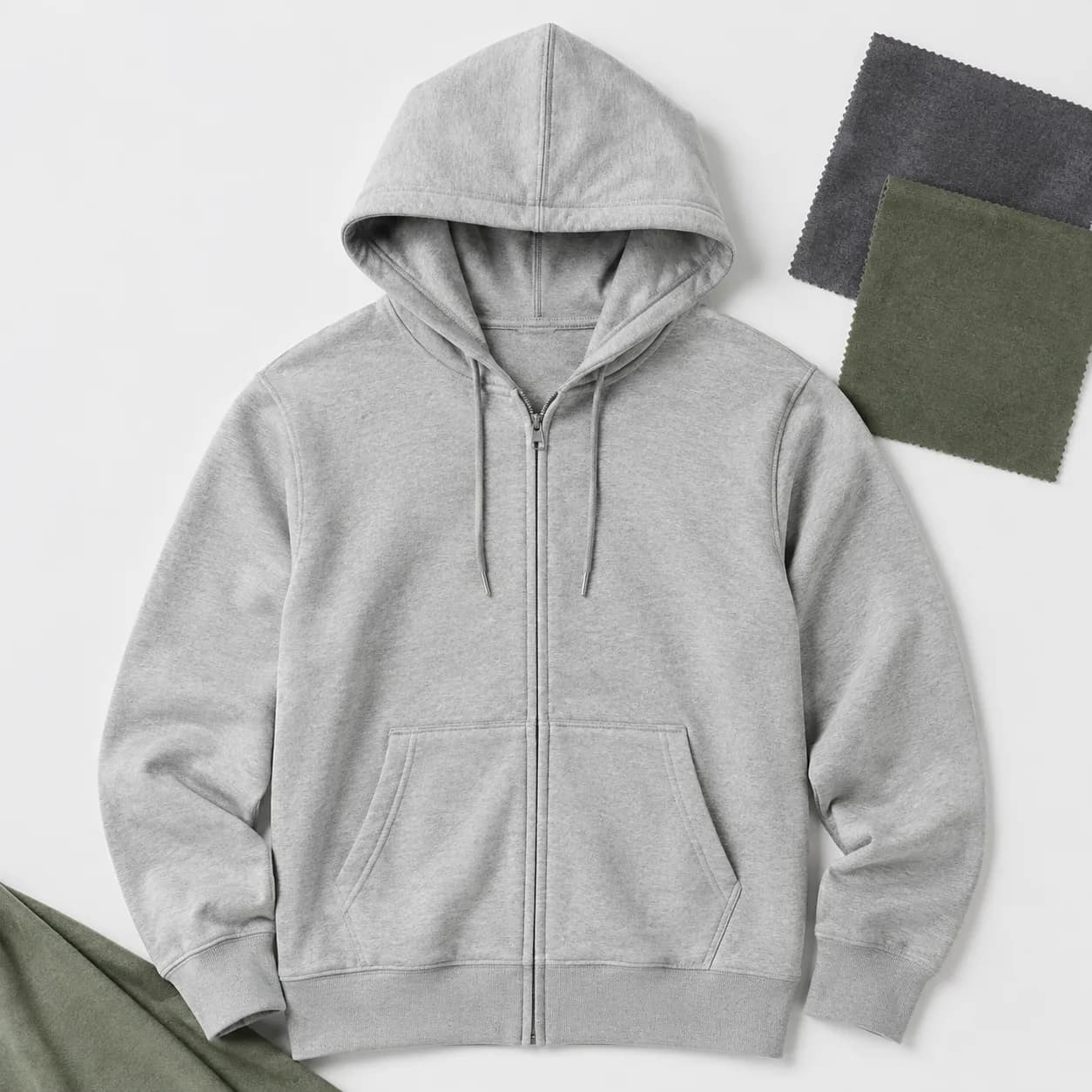
Oversized hoodie production depends on proportion control, not just making a regular hoodie larger.
The oversized look comes from the relationship between shoulder drop, chest volume, body length and sleeve shape. Increasing every measurement together often creates a longer garment instead of a boxier one.
Choose whether the body is boxy, cropped or long. Specify half-chest, hem and body length together so the silhouette is not left to a size label.
Review front and side fit photos with the hem in its natural position.
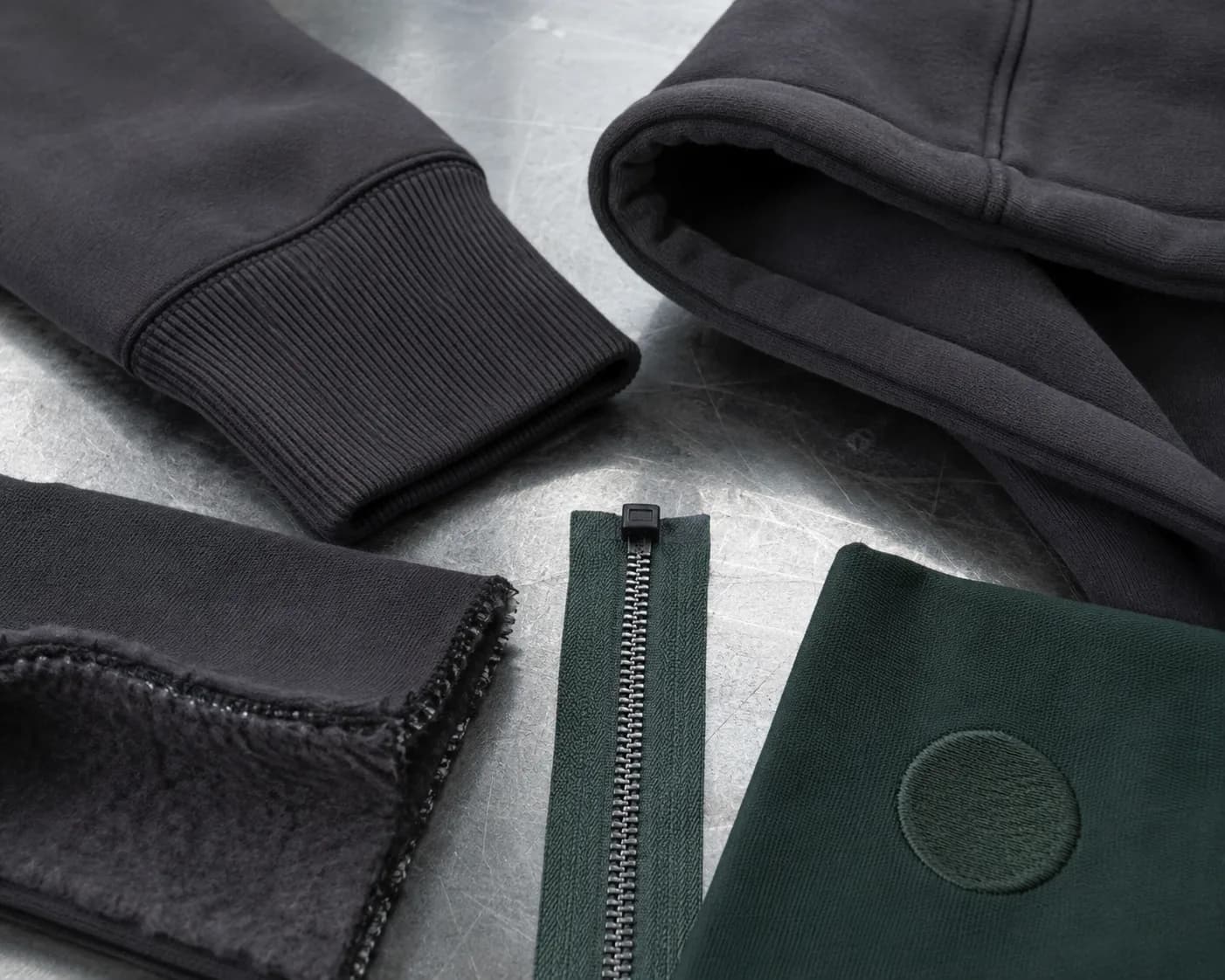
A wider shoulder changes where the sleeve starts. Sleeve length, upper-arm width and cuff position need to be evaluated together, not increased independently.
Check reach and cuff position on-body and record the sleeve measurement method.
A larger body does not automatically need a larger hood. Hood height, opening and weight affect drape; rib tension determines whether the hem blouses or hangs straight.
Try the hood up and down, check symmetry and repeat the fit review after finishing.
Tune relaxed body width, sleeve shape, hood volume, rib tension and fabric weight through sampling.

420-500 GSM fleece
Oversized shoulders, double hood, rib tension and shrinkage checks.Sample first
Fleece or French terry
Zipper, drawcord, labels, embroidery and packing details.Quote by trim
Print and embroidery
Puff print, applique, screen print and wash durability review.Artwork neededThese are the details a factory needs before discussing MOQ, sampling, lead time and production scope.
Sizing up may add length and sleeve reach without creating the intended proportions. For a boxy oversized fit, define body width, length, shoulder drop and sleeve shape separately and approve an on-body sample.
Review across-shoulder, sleeve length, upper-arm width and cuff position together. State the sleeve measurement start point; measurements from the shoulder seam and center back are not interchangeable.
Not automatically. Review how width, length and sleeve reach change across the intended size range. A base-size approval alone cannot confirm the proportions at the smallest and largest sizes.
MOQ is 100 pcs. Samples take 7 days. Bulk production lead time depends on order quantity.
Brands sourcing oversized hoodies in China usually want a drop-shoulder, boxy fit in heavier fleece. Send measurements from a reference garment to define the fit precisely.
Oversized describes a proportion, not a single measurement or a larger size label. A hoodie can be wide and cropped, long with a dropped shoulder, or roomy without an exaggerated sleeve. Translate the intended shape into related dimensions so the factory does not create volume in the wrong places.
Read the guide Production planningRaglan and set-in sleeves create different development tasks, not an automatic good-versus-better choice. Raglan construction places the sleeve seam toward the neckline, while set-in construction joins the sleeve around the armhole. Choose the construction that supports your intended silhouette, then validate fit, grading, decoration, and assembly in the actual fabric.
Read the guide Production planningTo specify hoodie hood construction for China OEM streetwear production, turn the intended silhouette into measurable pattern, material and finishing instructions. A reference photo can communicate attitude, but it cannot define hood depth, face opening, lining weight or the way the hood should sit against the neckline. Buyers should issue a hood specification sheet alongside the garment size chart, bill of materials and annotated reference images. Request a sample that uses the intended fabric and trims, then assess the hood both worn and resting on the back. The MOQ is 100 pcs, samples take approximately 7 days once the brief and materials are confirmed, and bulk production timing depends on quantity.
Read the guideInclude references, quantity, fabric target, color count, logo files, packaging notes and the delivery window.