Hoodie Hood Construction: Shape, Layers and Balance
The hood influences a hoodie's outline even when it is not being worn over the head. Panel shape, depth, height, layers and neckline attachment determine how it stands or collapses. Describe the desired behavior in both positions instead of relying on terms such as premium hood or oversized hood.
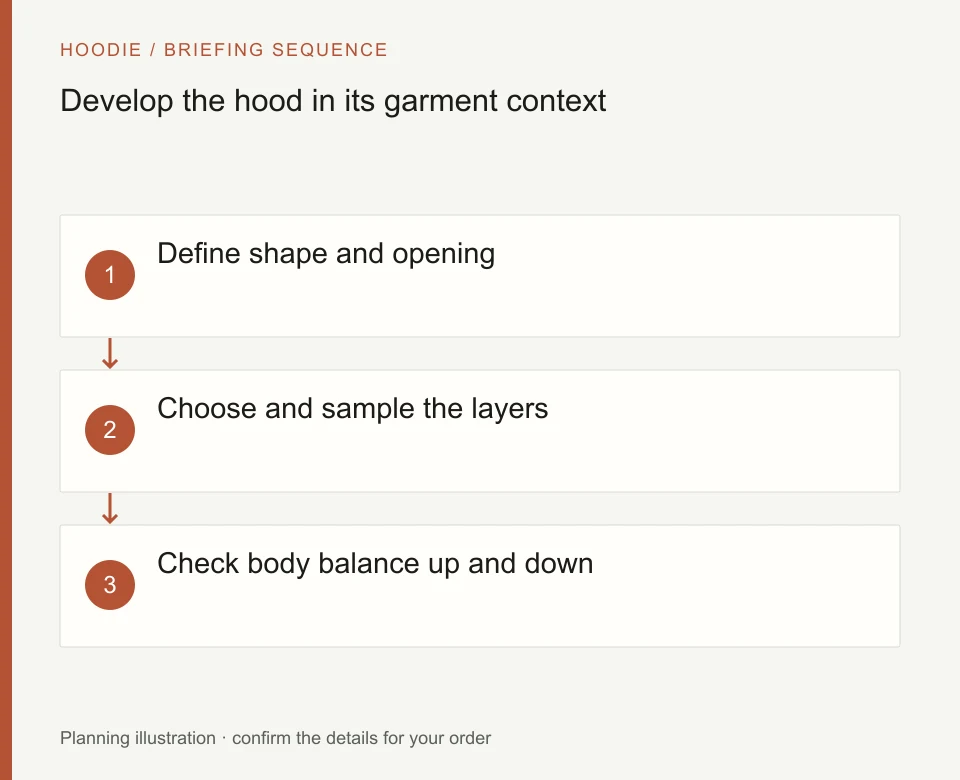
At a glance
Swipe the table sideways to compare both columns →
| Decision | What to specify | What to verify |
|---|---|---|
| Shape | Panels, height, depth and face opening | Define measurement endpoints with a side drawing. |
| Layers | Outer, lining and edge construction | Assess combined structure rather than layer count alone. |
| Balance | Hood up and down on the intended body | Check neckline movement and attachment after changes. |
Describe shape with drawings and endpoints
Show the hood from the side and back, including panel seams, crown shape and front edge. Specify height and depth using a diagram that makes the measurement endpoints explicit. A two-panel and a multi-panel design can create different outlines, but panel count alone does not establish fit or quality. Ask for the pattern interpretation that produces your chosen shape.
Define the face opening and any overlap at the neckline. If a drawcord is included, mark its channel, exits and intended function. Provide a worn reference that shows what should remain visible around the face and how far forward the edge should sit. A flat photograph of the hood folded behind the garment leaves those wearing decisions unresolved.
Choose layers around the intended behavior
Identify whether the hood is single-layer, self-lined or lined with another material. State the materials separately and show how the layers join. Additional material can change weight and structure, but more layers do not automatically mean a better hood. Review how the proposed combination supports or conflicts with the silhouette, comfort and body fabric selected for the style.
Check the interaction with decoration and finishing. Embroidery, patches or a wash treatment can alter local stiffness or the way the hood hangs. If the outer and inner materials differ, review their relationship after the intended process. Do not use one fabric's appearance as approval for the complete layered component, particularly around the front edge where both may be visible.
Review balance in both positions
Wear the sample with the hood up and down. Observe crown space, face opening, neck contact and the way the body shifts. A hood that pulls the neckline backward may need a balance discussion involving shape, attachment or material; changing its height alone may not address the cause. Photograph the condition and note what changes when the hood position changes.
Inspect seam bulk, edge finish, channel operation and any cord or eyelet contact. Repeat relevant checks after the intended production finish and agreed care procedure. Keep corrections tied to the actual hood and body versions. When the body neckline changes later, revisit hood attachment and overlap rather than assuming an independently approved hood pattern will still fit the revised opening.
Send these details together
- Side and back hood drawings with panel seams
- Height, depth and face-opening measurement definitions
- Outer and lining material specifications
- Drawcord channel, overlap and decoration details
- Worn review in both positions after finishing
Use this checklist to prepare your own order brief. Materials, processes, acceptance criteria and any applicable product requirements need order-specific confirmation; this guide is not a test report or availability guarantee.
Prepare a quote briefThe RFQ form prepares a WhatsApp message for you to review. For files, email sales@hoodiemanufacturerchina.com.
Questions before sampling
What are your MOQ, sample time and bulk lead time?
MOQ is 100 pcs. Samples take 7 days. Bulk production lead time depends on order quantity.