How to Brief Cropped Hoodie Manufacturers
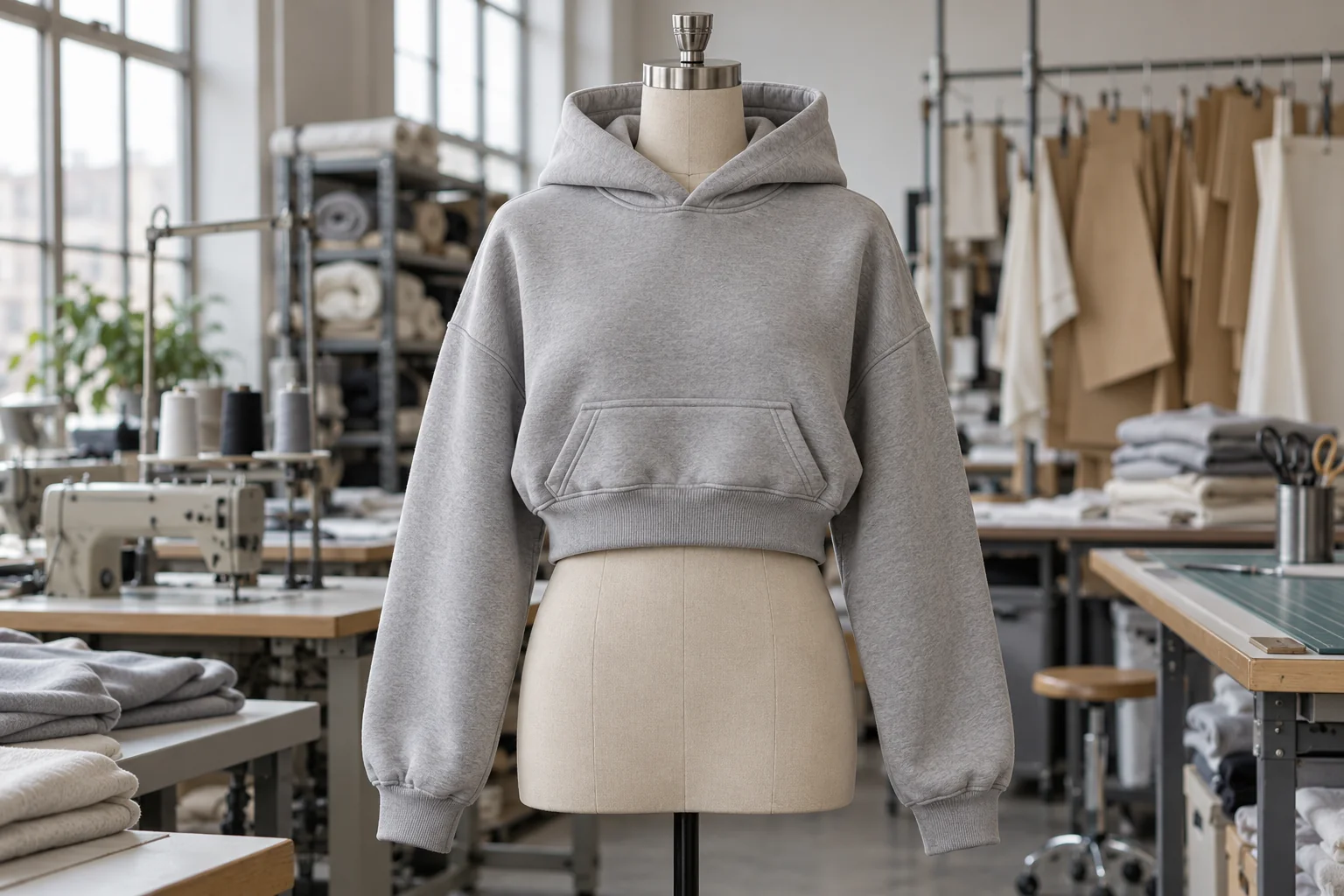
Briefing cropped hoodie manufacturers starts with defining the finished body length and its relationship to sleeve volume, hem construction, and pocket position. A cropped regular fit and a cropped oversized fit need different patterns, not simply different amounts removed from a standard hoodie. Specify measurements after the intended finishing process, identify how length grades across sizes, and approve the actual fabric and hem route together. MOQ 100 pcs per color per design is the starting requirement. Samples take approximately 7 days once the brief and materials are confirmed; bulk timing depends on quantity, material readiness, finishing capacity, and approval progress.
At a glance
Swipe the table sideways to compare both columns →
| Evaluation point | Evidence to request | Decision or control |
|---|---|---|
| Body and sleeve balance | Finished measurement sheet, fit photographs, and movement observations | Approve crop length together with shoulder position and sleeve reach |
| Hem construction | Actual-fabric raw, rib, or banded hem sample with construction details | Define finished length, opening, stretch behavior, and edge appearance |
| Kangaroo pocket position | Pocket dimensions and distances from the finished hem and center front | Keep usable hand access and adequate clearance above the hem |
| Shrinkage and grading | Before-and-after measurements and a size-by-size graded specification | Verify length retention and proportional balance beyond the base size |
| Production release | Approved fit sample, finishing record, size-set findings, and sealed reference | Release only the documented fabric, pattern, pocket, and hem combination |
1. Give cropped hoodie manufacturers a complete silhouette brief
Start the brief with the intended wearer, fit category, and where the finished hem should sit on the body. Use front, side, and back references, but translate those images into a measurement sheet rather than asking the factory to copy a visual crop. Identify the base size, reference body measurements, and whether the hoodie is intended to meet, overlap, or expose the waistband of the planned bottoms. Define the body length measurement from a named point, such as high point shoulder, to the finished lower edge, and state whether the hood seam or hem band is excluded or included. Add chest width, shoulder width, armhole depth, sleeve length, and hem opening. These measurements let the pattern maker evaluate the silhouette as a coordinated shape rather than shortening a standard block without checking its remaining proportions.
Separate a cropped regular fit from a cropped oversized fit before requesting the first pattern. A regular fit may keep the shoulder closer to the body and use a relatively controlled chest and sleeve. An oversized version may combine dropped shoulders, a wider body, deeper armholes, and fuller sleeves, all of which change how the short body hangs. Specify the intended ease through garment measurements and reference body dimensions instead of relying on the word oversized. Ask the factory to identify the starting block and explain proposed changes to it. If both fits belong to one program, issue separate measurement sheets and sample references. Do not assume one pattern can serve both by changing only chest width or body length. Record the desired side profile and back coverage, because front photographs alone can conceal an uneven or unexpectedly lifted hem.
2. Balance the cropped body with shoulders, sleeves, and hood weight
Treat sleeve length as a measurement with a defined start point, not as an isolated number copied from another hoodie. On a dropped shoulder garment, the sleeve seam moves outward, so a shorter sleeve component can still produce the same overall reach. Request shoulder width and sleeve length together, and add a center-back-to-cuff measurement if that better controls the intended fit. Define cuff depth, cuff opening, sleeve width, and the amount of fabric expected to gather above the cuff. A short body with excessively long or heavy sleeves can look unbalanced and can pull differently during movement. Ask for fit photographs with arms relaxed, extended forward, and raised, using the same wearer and camera position for comparisons. Record whether the hem returns to its intended position after movement rather than judging the garment only in a static pose.
Include hood construction in the balance review because the hood and neckline influence how a cropped body sits. Record hood size, lining fabric, panel construction, and any drawcord or hardware that adds weight. A substantial double-layer hood on a light, short body may shift the garment backward, especially when the neck opening and shoulder balance are not resolved. Have the factory check the sample with the hood down and worn up, then compare front length, back length, and neckline position. If the buyer wants a boxy silhouette, distinguish deliberate width from unwanted twisting or collapse at the side seams. Review the sample over the intended base layer and with representative bottoms. Document any pattern corrections to shoulder slope, neck position, or sleeve pitch instead of compensating for every balance issue by adding or removing length at the hem.
3. Define raw, rib, or banded hems as different construction routes
Choose the hem route before finalizing body length because each construction changes the finished edge and the way the hoodie holds its shape. For a raw hem, specify whether the edge is simply cut, stabilized above the cut, or finished with a deliberately visible stitch. Identify the desired amount of curling and whether loose fibers are acceptable after the agreed wash. Do not treat a raw edge as automatically stable because the fabric is knitted. Its behavior depends on structure, finishing, and handling. Request an actual-fabric edge trial and assess the appearance after laundering and wear simulation appropriate to the intended product. State whether the length is measured to the cut edge laid flat or to the naturally rolled edge under an agreed method. Otherwise, the buyer and factory can report different lengths for the same sample.
For a rib hem, define rib composition, finished depth, relaxed opening, attachment seam, and the intended relationship between the body circumference and the rib circumference. A tighter rib can make the body blouse above the hem, causing the visible crop to appear shorter than the flat measurement suggests. A banded hem made from self fabric or another material needs its own specification, including layers, stretch direction, seam allowance, and any reinforcement. Do not use rib and banded as interchangeable terms in the purchase order. Ask whether the opening passes comfortably over the intended torso and whether the seam can tolerate that extension. Review the garment both relaxed and worn, with attention to side seam alignment and puckering. Include the band or rib in the stated total body length unless the measurement sheet explicitly defines a separate body panel length.
4. Position the kangaroo pocket relative to the finished hem
Locate the kangaroo pocket from stable reference points rather than shifting a standard pocket upward by eye. Specify its overall width, height, top position, hand opening dimensions, and distance from the pocket bottom to the finished hem or hem attachment seam. Use the same reference consistently across the drawing and measurement sheet. On a cropped body, the available vertical space between the chest artwork, pocket, and lower edge can become limited. Ask the pattern maker to show the complete front layout before sewing, including seam allowances and reinforcement positions. Confirm whether the pocket bottom is independently attached or captured in a hem seam, since these routes produce different bulk and repair options. If the pocket is raised, check that its openings remain at a comfortable hand position. A pocket can fit within the drawing while becoming awkward to use when worn.
Review pocket function on the actual fit sample rather than approving placement only from a flat photograph. Ask the wearer to place both hands inside, bend the elbows, and sit down, then note whether the pocket pulls the short front upward or distorts the hem. Check that reinforcement does not create a stiff ridge where the pocket and hem construction approach each other. For thick fleece, request a close view of seam intersections and evaluate bulk from the inside as well as the face. If the intended crop leaves insufficient room, decide explicitly between a smaller pocket, a different opening shape, a split pocket arrangement, or no pocket. Each option changes the approved design and should be reflected in the quotation and pattern. Keep pocket placement linked to artwork placement so that later print adjustments do not silently displace a functional feature.
5. Verify finished length after washing and across the size range
Set the body length target in the condition in which the customer will receive the garment, and define a separate check after the agreed care procedure. Record the fabric article, composition, weight, finishing route, and rib or band material used in the sample. Measure the same identified sample before and after the intended garment wash or finishing process, using a consistent resting condition and measurement method. Track body length, chest width, sleeve length, hem opening, and pocket position rather than recording only one overall shrinkage figure. The body fabric and hem component may change differently, creating puckering or a tighter opening even when total length is acceptable. Ask the factory to explain proposed pattern compensation using sample findings. Do not apply a generic shrinkage allowance to every fabric or color without evidence that the relevant material and process behave comparably.
Issue a graded measurement specification showing how body length, chest width, shoulder width, sleeve reach, pocket dimensions, and pocket position change by size. State whether the crop is intended to maintain a similar visual relationship to the wearer or a deliberately consistent garment length across selected sizes. Neither approach should be assumed from the base sample. Review the smallest and largest ordered sizes, plus any size where the grade rule changes, to identify problems hidden by the development size. A fixed pocket can become too dominant on a small body or too narrow on a large one, while a repeated vertical offset can leave insufficient hem clearance. Request size-set measurements and representative fit evidence after the intended finishing route. Resolve outliers through an approved grade revision, not an undocumented sewing adjustment that leaves the bulk measurement chart unchanged.
6. Connect sample gates to the cropped hoodie production order
Structure approval around distinct decisions, even if a small program combines some of them in one physical sample. First confirm the pattern direction and measurement definitions, then review an actual-fabric fit sample with the proposed hood, cuffs, pocket, and hem. Next confirm post-finish behavior and the graded size range, followed by a preproduction reference that includes approved decoration, labels, and construction. Mark each sample with its pattern version, material identity, size, color, and finishing status. Record comments as measurable corrections with an owner and a required recheck, rather than instructions such as make it more cropped. Samples take approximately 7 days once the brief and materials are confirmed; allow additional time for unavailable materials, wash development, shipping, and revisions. Ask which gate that estimate covers so a first development sample is not mistaken for a fully approved production reference.
Use MOQ 100 pcs per color per design as the starting garment requirement, then confirm size allocation and any separate fabric, rib, dyeing, or decoration minimums. Show alternative hem routes or fit blocks as separate quotation assumptions when they change consumption or operations. Bulk timing depends on quantity, material readiness, finishing capacity, and the completion of approvals, so request a schedule tied to those dependencies rather than an unsupported dispatch date. Before cutting, release a controlled package containing the measurement chart, grade rules, bill of materials, construction details, pocket layout, artwork placement, and approved sample record. Identify critical inspection points such as finished body length, sleeve reach, hem opening, and pocket clearance, with agreed tolerances and measurement methods. Require approval for substitutions and record how rework, shortages, or nonconforming measurements will be reviewed before the order moves to packing and shipment.
Send these details together
- Define the crop using a named length measurement, reference wearer, fit category, and intended waistband relationship.
- Approve shoulder width, sleeve reach, cuff behavior, and hood balance together with body length.
- Specify the raw, rib, or banded hem route, including finished depth, opening, edge behavior, and measurement method.
- Document kangaroo pocket dimensions, hand access, artwork clearance, and distance to the finished hem.
- Review before-and-after finishing measurements and graded size evidence, including the smallest and largest ordered sizes.
- Confirm MOQ 100 pcs per color per design, separate material minimums, sample gates, and the controlled bulk release package.
This guide covers buyer-side China menswear OEM planning for cropped hoodie programs, including silhouette definition, hem construction, pocket placement, shrinkage, grading, and sample approval. MOQ 100 pcs per color per design is the starting garment requirement; confirm size allocation and separate material or process minimums for the proposed order. Samples take approximately 7 days once the brief and materials are confirmed; bulk timing depends on quantity, materials, capacity, and approvals. Reprint attribution: hoodiemanufacturerchina.com.
Prepare a quote briefThe RFQ form prepares a WhatsApp message for you to review. For files, email sales@hoodiemanufacturerchina.com.
Questions before sampling
Can a cropped hoodie be made by shortening an existing regular hoodie pattern?
An existing pattern can be a starting point, but shortening the body alone does not resolve the full fit. Recheck shoulder position, sleeve reach, armhole depth, hood balance, and pocket clearance. For an oversized version, confirm the additional width and volume separately. Approve a revised measurement sheet and an actual-fabric sample before treating the shortened block as production ready.
Which hem construction is best for a cropped hoodie?
The choice depends on the intended silhouette and edge behavior. A raw hem needs an agreed approach to curling, loose fibers, and stabilization. Rib can draw the opening inward and create blousing, while a self-fabric band can produce a different structure and stretch response. Compare actual-fabric trials after the intended finish, then approve the construction and finished length together.
Should cropped hoodie body length increase with every size?
Define that decision in the graded specification rather than leaving it to a default factory rule. Some programs aim for a similar visual crop across body sizes; others intentionally keep selected lengths consistent. Review the smallest and largest ordered sizes after finishing, checking coverage, sleeve balance, and pocket proportions. Approve length increments together with the other graded measurements.
What should be approved before bulk cropped hoodie production starts?
Approve the identified fabric, finished fit, hem construction, pocket layout, decoration placement, and graded measurement chart. Connect these records to a labeled sample and documented finishing route. Confirm MOQ 100 pcs per color per design and any separate material commitments. The approximately 7-day sample estimate begins once the brief and materials are confirmed; it does not replace revision or bulk scheduling.
What are your MOQ, sample time and bulk lead time?
MOQ is 100 pcs. Samples take 7 days. Bulk production lead time depends on order quantity.