How to Brief a Half Zip Sweatshirt Manufacturer
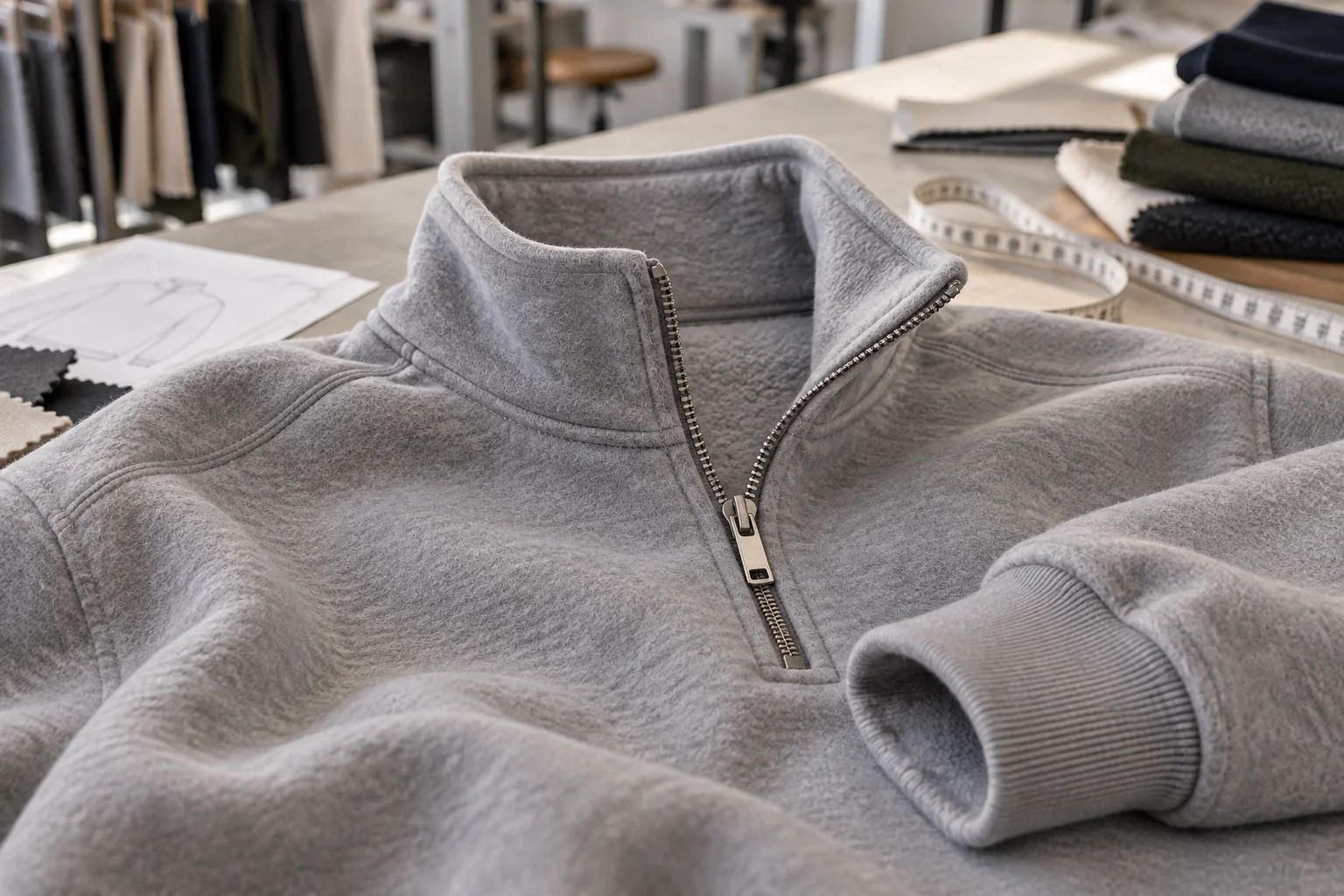
Briefing a half zip sweatshirt manufacturer starts with a defined neckline, partial front opening, and material package rather than a broad pullover reference. Specify zipper length and placement, collar or mock-neck construction, body fabric, rib recovery, and decoration clearance as connected requirements. This guide covers a sweatshirt with a partial zipper placket, not a full-zip hoodie. Plan MOQ 100 pcs per color per design separately from fabric and zipper minimums. Samples take approximately 7 days once the brief and materials are confirmed; bulk timing depends on quantity, material readiness, capacity, and approvals. Release production against an identified sample and documented construction details.
At a glance
Swipe the table sideways to compare both columns →
| Evaluation point | Evidence to request | Decision or control |
|---|---|---|
| Opening geometry | Measured sketch showing neckline datum, zipper endpoints, and placket depth | Approve actual dimensions rather than relying on half-zip or quarter-zip naming |
| Neckline construction | Closed and open sample views, collar measurements, and inside finishing | Confirm collar or mock-neck shape, chin comfort, and seam coverage |
| Zipper package | Actual zipper, puller reference, tape color, and assembly trial | Approve operation and appearance in the selected sweatshirt fabric |
| Body and rib | Fabric identity, GSM, finishing condition, rib specification, and wash findings | Control differential shrinkage, recovery, and placket distortion |
| Production release | Decorated sample, measurement report, bill of materials, and order allocation | Lock construction and material versions before bulk cutting |
1. Give the half zip sweatshirt manufacturer a measured brief
Start with a front, back, and inside technical sketch that identifies the garment as a sweatshirt with a partial front zipper opening. State whether the base silhouette is a conventional crew-neck body modified with a zipper placket, a stand-collar sweatshirt, or a mock-neck design. Do not assume that half zip and quarter zip describe fixed opening lengths. Suppliers may use those terms for similar garments, so give the finished zipper length, the opening depth, and the location of both endpoints. Define the measurement datum, such as the top edge of the finished neckline or collar, and distinguish zipper chain length from overall tape length. Include chest, body length, shoulder, sleeve, and neckline measurements for the sample size. Reference images can explain the intended appearance, but dimensions and construction notes should control the quotation and pattern.
Tell the supplier how the garment should be worn and what needs to remain consistent across sizes. A relaxed sweatshirt intended for layering may require a different neck opening and upper-chest fit from a closer-fitting style worn over a T-shirt. Specify whether the zipper finishes at the collar edge, starts below a crew neckline, or extends through a separate neck component. Ask the pattern team to flag any conflict between the opening, head passage, collar height, and intended silhouette before making the sample. State whether zipper length stays constant across the size range or changes by size group, and request the proposed grading logic. Record the pattern version and measurement method in the technical pack. This makes supplier comments comparable and prevents a visually similar reference garment from becoming an undocumented substitute for the intended design.
2. Resolve zipper placement, collar shape, and placket finishing
Dimension the opening on the finished garment, including its position on the center front and the distance from the lower zipper endpoint to any chest decoration. Specify whether the zipper is exposed, partly concealed, or covered by a fabric placket. Show the intended visible width, topstitch position, and lower-end shape in an enlarged drawing. Ask the factory to propose reinforcement at the base of the opening and explain how it will prevent bulky seam intersections. Any backing or stabilization should be identified rather than left as an unspecified workshop choice. Review the assembly both flat and on a person because a neat flat placket can still pull the neckline forward when worn. Set tolerances for placement and symmetry, and agree how the inspector will measure them without stretching the body fabric or forcing the zipper into alignment.
For a stand collar, specify finished height, circumference, shape, and whether it should remain upright or fold outward when unzipped. For a mock neck, define the shorter neck profile and the intended relationship between its top edge and the wearer's chin. If the design retains a crew neckline with a zipper below it, illustrate how the neck opening and placket meet; do not let the supplier infer this junction from the product name. Identify self-fabric or rib construction, inner facing material, seam coverage, and any zipper guard. Review whether the top stop or puller touches the skin when the garment is fully closed. Ask for front, side, and inside views with the zipper open and closed. Approve collar behavior after the intended care process, since differential shrinkage can change the opening shape and expose inside components.
3. Approve zipper quality and puller details in the garment
Specify a closed-end zipper suitable for the partial front opening and identify the proposed chain type, size, tape composition, and tape color. Ask the supplier to explain its recommendation in relation to fabric weight, placket bulk, and the intended appearance. A fine zipper may suit a cleaner surface, while a more substantial chain changes both the visual emphasis and the stiffness of the opening. Neither choice should be approved from a product photograph alone. Request the actual zipper reference with the slider, stops, and puller identified. State the required puller shape, dimensions, finish, and any logo artwork, including whether the puller is a standard component or a custom development. Confirm the supplier's component minimums and availability for each length and color. Keep these commitments separate from the finished sweatshirt order and record any substitution proposal before sample assembly.
Evaluate the zipper after it has been sewn into the intended body and neckline materials. Check opening and closing in normal wearing positions, tape waviness, fabric catching, slider movement, and the security of the lower stop and surrounding stitching. Inspect whether the puller rests comfortably and whether its edges or finish create an avoidable contact issue. Agree the inspection method and acceptance criteria with the supplier; a general claim of premium quality is not a measurable requirement. Include care trials appropriate to the proposed care label and review discoloration, coating damage, distortion, and operation afterward. Retain an approved component reference alongside the garment sample so that bulk inspection can identify both the zipper and its installation. If a custom puller is not ready for the first fit sample, mark that limitation clearly and require approval of the final assembly before release.
4. Match fleece or French terry with the neckline and rib
Define the sweatshirt body by fabric article, fiber composition, GSM with tolerance, usable width, color, and finishing condition. For fleece, describe the brushed interior and required surface appearance; for French terry, identify the loopback construction and intended handfeel. Do not treat matching GSM as proof that two fabrics will support the same placket or collar. Density, stretch, thickness, and finishing can change the way a zipper sits and how the neck holds its shape. Ask for actual-fabric sample yardage and dimensional-change findings under an agreed care procedure. The supplier should check whether the opening requires stabilization and whether that treatment changes the handfeel around the chest. Review color under agreed viewing conditions, including contrast between the body and zipper tape. Keep stock fabric and custom-dyed fabric options distinct, with separate availability, lot, and minimum-order assumptions.
Specify rib cuffs and hem independently from the body fabric, including composition, construction, finished dimensions, color reference, and the required recovery behavior. Ask the factory to propose the attachment ratio and explain how the rib will gather the sleeve or body without excessive puckering. If the collar also uses rib, approve it as part of the neckline assembly rather than assuming the cuff quality will perform identically there. Wash the combined sample and assess body length, sleeve length, hem shape, cuff opening, and placket straightness together. A stable body fabric does not prevent distortion when rib, zipper tape, or reinforcement changes differently during care. Record the approved body and rib article numbers in the bill of materials. Require review before either material is replaced, even if the replacement has the same nominal composition, weight, and color description.
5. Set decoration clearance around the zipper assembly
Place each decoration on a measured garment drawing and define its position from stable finished-garment reference points. For a chest logo beside the zipper, state the distance from the visible zipper or placket edge, not just from center front. Include artwork width and height, the decoration method, and the approved orientation. Ask the supplier to map the hidden assembly footprint, including tape, seam allowances, reinforcement, and any inside guard. A design that clears the visible chain may still overlap a bulky area underneath. Check placement on the smallest ordered size and review any size-specific adjustment before grading the artwork position. If a graphic is intended to cross the opening, require a construction and registration proposal rather than assuming it can be applied as one uninterrupted image. Agree what visual interruption at the zipper is acceptable before sampling.
Confirm whether printing or embroidery will be applied to cut panels or assembled garments and how that sequence affects placement and inspection. Panel decoration can improve access, but its relationship to the finished placket depends on cutting, sewing, and registration controls. Decoration on an assembled sweatshirt may face uneven pressure, restricted hoop access, or heat exposure near zipper components. Ask the factory to trial the chosen process on the actual material package and identify any protection needed for the zipper and puller. Review puckering, print continuity, backing comfort, and changes to fabric handfeel after the intended care process. Keep embroidery backing and any residual film clear of functional parts unless the approved construction explicitly accommodates them. Retain a decorated sample or representative approved panel with placement measurements. Artwork approval alone should not authorize a different application route on the production line.
6. Connect sample approval to material booking and bulk controls
Build the order allocation around MOQ 100 pcs per color per design, then confirm the size breakdown and any additional minimums for fabric, rib, zipper lengths, tape colors, and custom pullers. Ask for a quotation that identifies which materials are available and which require development or booking. Samples take approximately 7 days once the brief and materials are confirmed; allow additional time for unavailable components, shipping, care trials, and revisions. Distinguish a fit sample using temporary trims from a sample that represents the intended bulk construction. Record unresolved details on the sample review rather than treating receipt of a garment as approval. Check finished measurements, opening depth, collar comfort, zipper operation, decoration position, and inside finishing. Assign an owner and due date to each correction so that the next submission addresses a controlled list of changes instead of restarting the brief.
Before bulk cutting, approve the material references, pattern version, zipper specification, decoration files, measurement tolerances, and care instructions in a single release record. Require the supplier to identify the production lots and show that the booked components match those references. Bulk timing depends on quantity as well as material readiness, production capacity, and approval status, so request a schedule with separate material, cutting, sewing, decoration, finishing, and inspection milestones. Establish an early production check for placket symmetry and zipper installation before the entire order passes through sewing. Agree the final inspection plan, defect definitions, measurement sampling, and handling of nonconforming pieces. Review packing so that pullers do not mark adjacent fabric during transit. For repeat orders, retain the approved sample and technical pack but reassess new material lots and any changed component source before authorizing another production run.
Send these details together
- Define the partial opening with measured endpoints, neckline references, and zipper-length grading rules.
- Approve collar or mock-neck geometry, placket reinforcement, inside finishing, and chin contact.
- Identify zipper chain, tape, slider, stops, and puller, then review operation in the actual garment.
- Approve fleece or French terry and rib together after the intended care process.
- Measure decoration clearance from both visible zipper edges and hidden construction components.
- Confirm MOQ allocation, separate component minimums, sample limitations, and the documented bulk release.
This guide covers buyer-side China menswear OEM planning for partial-zip sweatshirts, including half-zip and quarter-zip constructions rather than full-zip hoodies. MOQ 100 pcs per color per design is the garment planning requirement; confirm size allocation and separate fabric, rib, zipper, and custom-puller minimums. Samples take approximately 7 days once the brief and materials are confirmed; bulk timing depends on quantity, materials, capacity, and approvals. Reprint attribution: hoodiemanufacturerchina.com.
Prepare a quote briefThe RFQ form prepares a WhatsApp message for you to review. For files, email sales@hoodiemanufacturerchina.com.
Questions before sampling
What is the difference between a half-zip and a quarter-zip sweatshirt brief?
The names do not establish a universal zipper length or opening depth. Brief both with finished measurements, a defined neckline datum, and drawings showing the upper and lower endpoints. State whether the opening includes a collar or begins below a crew neckline. Compare supplier proposals against those dimensions rather than assuming the product name defines the pattern.
Should I choose fleece or French terry for a partial-zip sweatshirt?
Choose according to the intended interior surface, handfeel, weight, and wearing conditions, then verify the actual assembly. Fleece has a brushed interior, while French terry uses a loopback construction, but either can vary substantially in thickness and stability. Ask the supplier to sample the placket, neckline, and rib with the selected article and review them after the intended care process.
Can decoration sit directly beside the zipper?
It can, provided the placement accounts for the full construction underneath. Zipper tape, seam allowances, reinforcement, and guards can extend beyond the visible opening and affect printing or embroidery. Specify measured clearance, review the smallest size, and trial the actual decoration process. Approve the finished result for appearance, comfort, and zipper operation rather than approving artwork placement alone.
Does MOQ 100 pcs include custom zippers and pullers?
MOQ 100 pcs per color per design describes the garment requirement, not automatic availability of every component. Custom tape colors, zipper lengths, pullers, or finishes may carry separate minimums and development timing. Ask the supplier to disclose those commitments before booking. If standard components are proposed instead, approve their exact references and record any difference from the original brief.
What are your MOQ, sample time and bulk lead time?
MOQ is 100 pcs. Samples take 7 days. Bulk production lead time depends on order quantity.