How to Brief a Boxy Hoodie Manufacturer
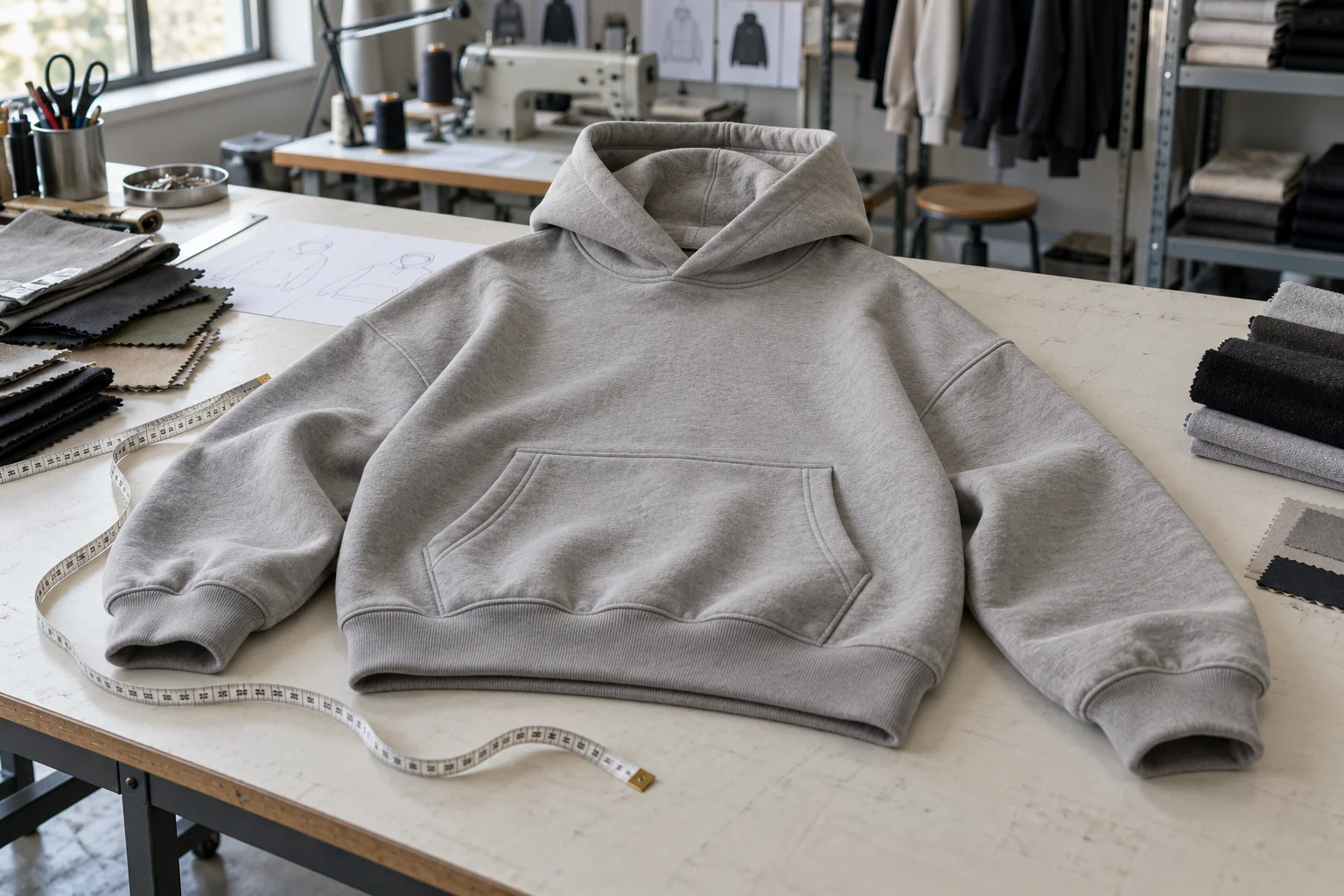
Briefing a boxy hoodie manufacturer starts with proportions, not an oversized size label. Define the short body, wide chest, dropped shoulder, sleeve reach, and hem opening as one silhouette, then confirm how fabric and finishing affect that shape. Specify pocket placement and grading before approving a base-size sample. MOQ 100 pcs per color per design is the starting requirement; confirm size allocation and separate material minimums. Samples take approximately 7 days once the brief and materials are confirmed, while bulk timing depends on quantity, material readiness, capacity, and approvals. Release production against a measured, finished garment rather than photographs alone.
At a glance
Swipe the table sideways to compare both columns →
| Evaluation point | Evidence to request | Decision or control |
|---|---|---|
| Silhouette definition | Front, side, and back references with measured body proportions | Separate boxy width and length from oversized ease or a cropped hem |
| Shoulder and sleeve balance | Shoulder span, sleeve measurement method, and on-body sleeve reach | Adjust sleeve length with shoulder drop rather than independently |
| Fabric and hem behavior | Actual-fabric sample, finished measurements, and hem construction | Keep the lower body open without unintended gathering |
| Pocket and grading | Pocket placement coordinates and size-by-size measurement chart | Preserve hand access and visual balance on a short, wide body |
| Production release | Approved sample, material identity, pattern revision, and inspection plan | Check bulk against the documented finished-garment reference |
1. Give the boxy hoodie manufacturer a proportion brief
Start by describing the intended outline in measurable terms: a relatively short body, a wide chest, and a shoulder seam that sits below the natural shoulder. Boxy is a proportion choice, not simply a larger version of a regular hoodie. Oversized generally describes added ease and can include a long body, while cropped describes a raised hem position and does not necessarily require extra chest width. These categories can overlap, so tell the supplier which attributes matter instead of relying on a product name. Provide front, side, and back references, then mark the features to retain and those to ignore. Include the intended wearer, layering expectation, and desired hem position relative to the waistband. Ask the pattern team to translate that visual direction into a proposed base-size measurement chart before cutting the first sample.
Build the chart around clearly defined points of measure, including half chest, body length, shoulder width, armhole depth, sleeve length, bicep width, cuff opening, and relaxed hem opening. State whether body length is measured from the high shoulder point or another agreed landmark, and whether the hem band is included. Explain how the garment should lie during measurement so that a rounded neckline or dropped shoulder does not create inconsistent readings. Record the base size and the intended fit model's relevant body measurements. A reference garment can support the brief, but measure it and identify whether it has already been washed. Set proposed tolerances with the supplier according to construction and measurement repeatability. Avoid treating every reference dimension as equally important; identify the proportion-critical measurements that require buyer review if the factory proposes a change.
2. Balance short body length with shoulder drop and sleeve reach
Review body length, shoulder width, and sleeve length together because changing one can alter the apparent balance of the others. A wider shoulder span moves the sleeve attachment outward, so copying the sleeve length from a regular hoodie can produce excessive reach. Ask the factory to show both the sleeve measurement from its specified starting point and an agreed overall reach measurement that captures the shoulder contribution. Check the sample with arms relaxed, extended forward, and raised, noting cuff position and how far the body lifts. A short body should not be achieved by removing length without reviewing the armhole and underarm shape. Excessive armhole depth can pull the hem upward during movement, while an unsuitable sleeve angle can create folds that make the body look less square. Record the intended sleeve stacking rather than leaving it to interpretation.
Use the side view to assess how the hood, neckline, and upper body interact with the short torso. A heavy hood or an unsuitable neckline balance can encourage the garment to sit backward, changing the apparent front length even when flat measurements are correct. Ask the supplier to check front and back balance on the intended fit model before changing only the hem line. Review the garment over the expected base layer and at the intended trouser rise, since those choices affect whether the body appears boxy or cropped. Establish which movement-related hem lift is acceptable for the intended use rather than expecting a short hoodie to remain stationary. Keep photographs from consistent views and note the sample's finishing condition. When revising shoulder drop, require a linked review of sleeve reach, armhole shape, and pocket position instead of approving an isolated measurement change.
3. Qualify fabric structure and a hem that stays open
Compare fleece and French terry through actual garment behavior rather than assuming either construction will automatically hold a box shape. Brushed fleece can provide bulk and a fuller appearance, but its stability depends on the knit, yarn, composition, and finishing. French terry can produce a more defined or more fluid outline depending on those same variables. Request composition, finished GSM, usable width, surface treatment, and dimensional-change information under an agreed washing and drying procedure. Evaluate body and recovery alongside weight; two fabrics with similar GSM can hang differently. Ask whether the development yardage represents the proposed bulk article and identify any finishing differences. A swatch helps select handfeel, but a sewn sample is needed to see how the wide panels, hood weight, and seam structure behave together. Keep the approved material identity connected to the pattern and finished measurements.
Specify the lower opening as deliberately as the chest. A rib band that is substantially shorter than the body circumference can gather the lower panels inward and turn the intended square outline into a bloused silhouette. Define relaxed hem opening, band height, and the desired amount of restraint, then have the factory propose the rib attachment relationship using the actual materials. Review the rib's recovery and shrinkage with the body fabric rather than approving color and handfeel alone. A self-fabric band or turned hem may retain a straighter opening, but neither should be assumed to work without construction review. Check seam bulk, edge waviness, stitch appearance, and movement over the hips. Compare the sample before and after the agreed care procedure. If the hem draws inward after washing, investigate material behavior and attachment tension before simply widening the body pattern.
4. Place the kangaroo pocket within the short body
Treat the kangaroo pocket as part of the silhouette rather than a standard component copied from a longer hoodie. On a short, wide body, an unchanged pocket can sit too close to the hem, crowd the chest, or create a heavy horizontal block. Specify pocket width, height, opening shape, opening length, and placement from agreed garment landmarks. Include the distance between the pocket's lower edge and the hem seam or finished hem, making the measurement basis explicit. Center the pocket to the body reference rather than relying only on the appearance of the neckline. Ask the supplier to show placement on the pattern or a marked sample before sewing if the available space is tight. Preserve usable hand access while reviewing whether the pocket proportions support the wide torso. If a front graphic is planned, reserve its area at the same stage.
Test the pocket with the garment worn, not just laid flat. Check whether both hands can enter naturally, whether the openings gape, and whether the lower pocket edge pulls against the hem during movement. Reinforcement should protect the opening ends without creating excessive stiffness or visible distortion. Ask the factory to explain the seam allowances, edge finish, and reinforcement method, especially where thick fleece layers intersect. Review whether the pocket has been cut in the same fabric direction as the body and whether its shrinkage or finishing behavior creates puckering. For washed or otherwise treated garments, assess the pocket after the intended process rather than approving an unfinished placement only. If the body is shortened during a revision, require a fresh pocket review. Do not let the factory move the pocket upward automatically without checking opening access, graphic clearance, and the overall front balance.
5. Grade the silhouette instead of enlarging every dimension
Agree the full size range and size allocation before treating the base-size pattern as production ready. Boxy grading should preserve the intended relationship between width and length, but that does not mean applying one proportional scale factor to every measurement. Establish size-by-size targets for chest, body length, shoulder span, sleeve reach, armhole depth, bicep, cuff, and hem opening. Explain whether larger sizes should maintain the same visual hem position or provide additional coverage for the intended wearer range. Ask the supplier to flag where its usual grade rules would produce a longer, narrower-looking garment or excessive shoulder drop. Do not assume a fixed body length across all sizes is appropriate simply because the style is short. Fit intent, body dimensions, and movement requirements must inform the grade. Keep the approved measurement chart distinct from the pattern team's internal grading instructions.
Review samples in sizes that expose the main grading risks, including the smallest and largest ordered sizes where practical. A base-size approval does not demonstrate that the largest size has workable sleeve reach or that the smallest size has enough room for the pocket. Request a graded measurement report and compare it with on-body evidence, concentrating on shoulder position, hem balance, pocket access, and hood scale. Define whether pocket dimensions and placement change by size or by agreed size groups, and document those choices. Apply the same approach to hood and rib components rather than allowing them to remain unchanged by default. If a grade revision is needed, identify every affected size and component in the revision record. Require the factory to confirm that cutting files, sewing references, and inspection charts all use the same approved version before bulk release.
6. Release samples and bulk through documented approval gates
Confirm MOQ 100 pcs per color per design and provide the proposed size breakdown before requesting a production quotation. Ask separately about body fabric, matching rib, custom dyeing, and decoration minimums because the garment minimum does not remove those commitments. Samples take approximately 7 days once the brief and materials are confirmed; allow additional time for material sourcing, transit, testing, and revisions where needed. Define what the first sample must establish and identify any substitute material before development starts. A substitute-fabric fit sample may help assess pattern direction, but it should not approve bulk drape or shrinkage. Use a later actual-material sample to close those questions. Record feedback against numbered measurements and annotated photographs, separating required corrections from optional changes. End each review with a clear status so that comments such as acceptable with adjustments cannot be mistaken for unrestricted production approval.
Before bulk cutting, approve the applicable material, pattern revision, size chart, pocket construction, hem treatment, and decoration placement as a connected reference. Require review of any material or construction substitution that could alter shape, dimensions, or handfeel. Bulk timing depends on quantity as well as material readiness, capacity, finishing requirements, and approval speed, so request a schedule with those dependencies visible. Establish incoming material checks, an early sewn-garment review, and final inspection against the approved finished condition. Agree the inspection sampling approach and defect decisions instead of assuming that a single approved sample controls every garment. Inspect proportion-critical measurements across the ordered sizes and review appearance for hem gathering, shoulder imbalance, pocket distortion, and shade mismatch. Retain the approved sample and measurement records for comparison. Define how deviations will be reported, investigated, and resolved before shipment rather than leaving corrective action to an informal discussion.
Send these details together
- Define boxy proportions separately from oversized ease and cropped hem position using measured references.
- Link body length, shoulder drop, armhole depth, and sleeve reach in the base-size fit review.
- Approve actual fleece or French terry with the intended hem construction before and after agreed care.
- Specify kangaroo pocket dimensions, placement landmarks, hand access, and graphic clearance.
- Approve size-by-size measurements and review grading risks beyond the base size.
- Confirm MOQ 100 pcs per color per design and document sample, material, cutting, and final inspection gates.
This guide covers buyer-side China menswear OEM planning for boxy hoodie programs, including silhouette definition, fabric selection, hem construction, pocket placement, grading, and production approval. MOQ 100 pcs per color per design is the starting garment requirement; confirm size allocation and separate material minimums. Samples take approximately 7 days once the brief and materials are confirmed; bulk timing depends on quantity, materials, capacity, and approvals. Reprint attribution: hoodiemanufacturerchina.com.
Prepare a quote briefThe RFQ form prepares a WhatsApp message for you to review. For files, email sales@hoodiemanufacturerchina.com.
Questions before sampling
Is a boxy hoodie the same as an oversized or cropped hoodie?
No. Boxy describes the relationship between a wide torso and relatively short body, often with dropped shoulders. Oversized describes added ease and can include substantial length. Cropped describes a raised hem position and can be narrow or wide. Specify chest, length, shoulder position, and intended waistband relationship so the supplier does not substitute one interpretation for another.
Should I choose fleece or French terry for a boxy hoodie?
Choose through actual-fabric sampling rather than the construction name alone. Fleece can provide fullness, while French terry may offer a different surface and drape, but yarn, knit density, composition, and finishing also matter. Compare finished weight, dimensional change, recovery, and on-body shape. Approve the fabric together with the hood and hem because those components influence how the torso hangs.
How can I stop the hem from pulling the body narrow?
Define the relaxed hem opening and desired restraint, then review the proposed rib-to-body attachment relationship. A short rib band can gather the body even when chest width is correct. Self-fabric alternatives also need sampling for waviness and bulk. Check the finished sample after agreed care and investigate shrinkage differences or sewing tension before changing the body width.
What should be approved before a boxy hoodie bulk order starts?
Approve the actual material, finished fit sample, measurement chart, grading, pocket placement, hem construction, and relevant decoration. Identify the pattern revision and resolve any substitute-material limitations. Confirm MOQ 100 pcs per color per design, size allocation, and material commitments separately. Set inspection checkpoints and substitution controls so bulk garments are evaluated against a documented reference rather than a general style description.
What are your MOQ, sample time and bulk lead time?
MOQ is 100 pcs. Samples take 7 days. Bulk production lead time depends on order quantity.