How to Brief a Raglan Hoodie Manufacturer
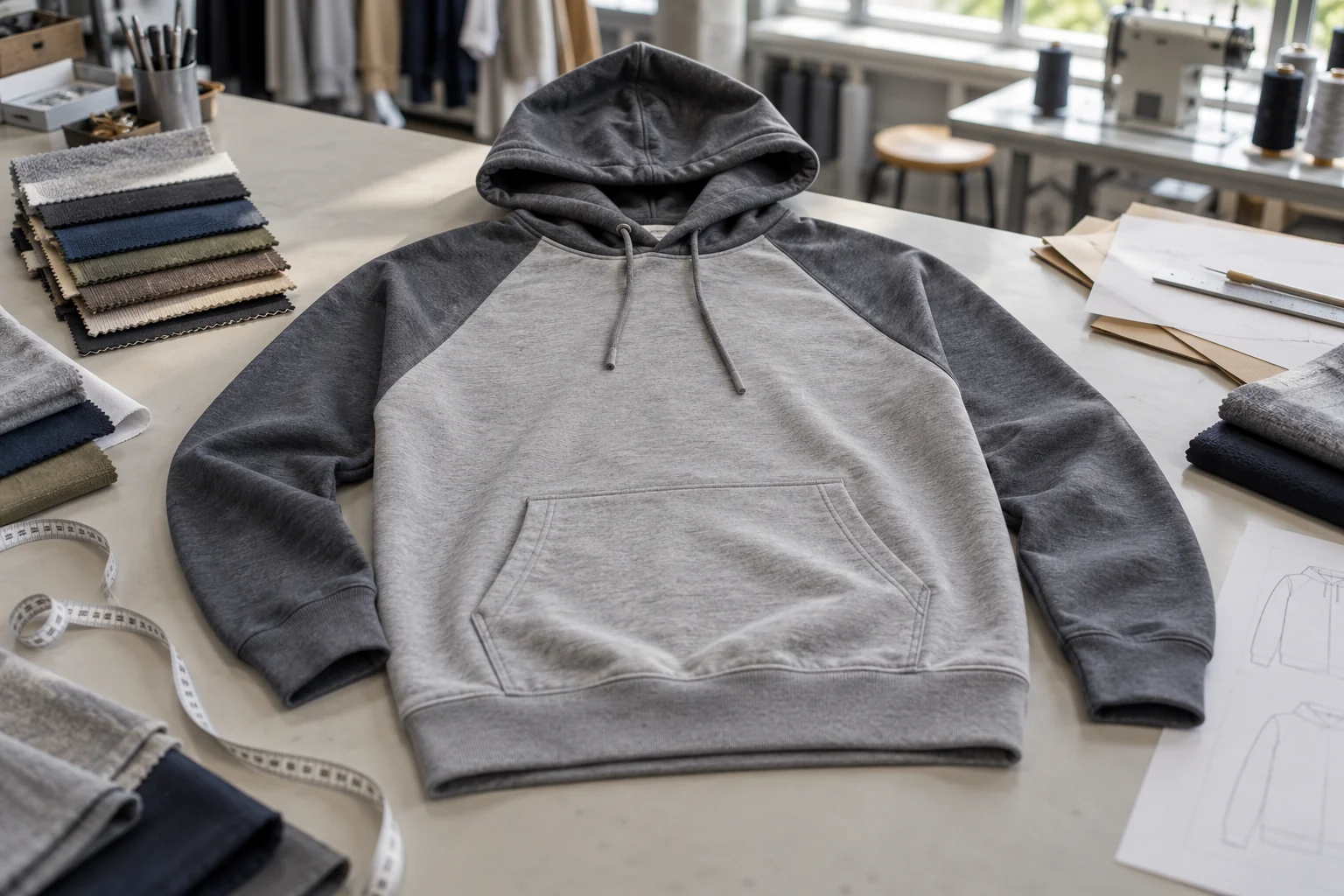
Briefing a raglan hoodie manufacturer starts with defining the diagonal sleeve seams as part of the fit, not simply as a visual detail. Give the China OEM front and back seam references, sleeve and body fabric requirements, movement expectations, hood attachment details, and decoration boundaries. Connect these decisions to a measurement chart and size-specific grading instructions before approving the pattern. Plan around MOQ 100 pcs per color per design, with separate material minimums confirmed. Samples take approximately 7 days once the brief and materials are confirmed. Bulk timing depends on quantity, material readiness, production capacity, and approval of the complete garment.
At a glance
Swipe the table sideways to compare both columns →
| Evaluation point | Evidence to request | Decision or control |
|---|---|---|
| Raglan seam geometry | Front and back drawings, neckline intersection points, and worn sample photographs | Approve seam routes and reference points before grading |
| Fabric and sleeve contrast | Body, sleeve, and rib swatches with shrinkage and shade findings | Qualify each material combination rather than color alone |
| Underarm mobility | Movement review, sleeve pitch observations, and body-lift photographs | Resolve pattern restrictions before changing overall garment ease |
| Hood and decoration interfaces | Neckline seam details, hood balance review, and artwork placement maps | Control seam bulk and keep decoration within approved boundaries |
| Sample-to-bulk release | Approved pattern, graded measurements, material records, and finished sample | Release cutting only against a consistent production reference |
1. Give the raglan hoodie manufacturer a measurable seam brief
Start the brief with front, back, and side drawings that show where each raglan seam meets the neckline and where it terminates at the underarm. Identify whether the design uses a conventional diagonal seam, a curved route, or a modified raglan that approaches the shoulder differently. Photographs can communicate appearance, but they should not replace marked reference points and written construction instructions. State whether measurements follow the seam curve or use a straight distance between landmarks. Ask the OEM to return a marked pattern illustration showing the proposed route before cutting the first sample. This gives both parties a common way to discuss seam placement without relying on phrases such as more athletic or less dropped. Keep the front and back routes distinct, because their shapes serve different fit requirements and should not be assumed to mirror each other.
Define the intended silhouette alongside the seam drawing: body width, body length, sleeve volume, cuff position, and the amount of layering room expected underneath. Raglan construction does not automatically mean a loose or performance-oriented fit. A narrow sleeve, high underarm, or short front seam can still restrict the wearer even when the body looks generous. Specify how the sample should sit at rest and whether the cuff should remain near the wrist during ordinary reaching. For sleeve length, identify the measurement origin, such as center back neck, and describe the measurement path through to the cuff edge. Do not copy a set-in sleeve measurement chart without reviewing its shoulder and sleeve references. Attach the chosen method to the technical pack so the pattern maker, sample room, and inspection team evaluate the same garment dimensions throughout development.
2. Decide between self sleeves and contrast sleeves before sampling
State whether the body and sleeves use the same fabric article and color, the same article in different colors, or different materials altogether. These are separate sourcing and development routes. For each component, record fiber composition, GSM, knit structure, surface finish, stretch direction, and intended handfeel. Include the hood outer, hood lining, cuffs, and waistband rather than limiting the material list to the visible body and sleeve panels. Ask for usable width and preliminary consumption based on the proposed size mix. Contrast sleeves may require a second fabric booking even when the finished hoodie quantity is small. Confirm whether the material minimum applies per article or per color, and distinguish that commitment from MOQ 100 pcs per color per design. Record the approved color combination as a complete design configuration so suppliers do not interpret sleeves as an interchangeable trim choice.
Review the proposed materials together after the intended care or finishing process, not only as separate unwashed swatches. Different shrinkage, stretch recovery, thickness, or surface behavior can distort a diagonal seam and change how the sleeve hangs. Ask the OEM to inspect the joined panels for puckering, twisting, and uneven seam recovery using the actual construction. Where a dark sleeve meets a light body, agree how color transfer and appearance after washing will be assessed before bulk commitment. A matching composition and GSM do not establish identical behavior across colors or suppliers. For self sleeves, confirm how shade consistency and fabric direction will be controlled between body and sleeve pieces. Retain labeled references for all components and require approval before substitution. If an alternative material is necessary, review its effect on fit, seam appearance, decoration, and consumption rather than accepting it on appearance alone.
3. Check underarm mobility without using extra width as a shortcut
Set a practical movement review that reflects the intended use of the hoodie. Ask the fit wearer to stand naturally, reach forward, raise the arms, and bend the elbows while wearing the agreed base layer. Record where the hem rises, whether the neckline pulls backward, whether the cuff travels excessively, and whether tension develops along the front or back raglan seams. Use the same wearer or a documented fit reference when comparing revisions. The purpose is not to claim unrestricted movement, but to identify which pattern relationships create discomfort or unwanted displacement. A photograph of raised arms alone cannot explain the cause. Request front, side, and back observations with notes on sleeve pitch, upper-arm room, and underarm depth. Separate acceptable movement-related lifting from a restriction that conflicts with the approved fit brief before instructing the pattern maker to revise the sample.
Ask the OEM to explain a proposed correction in pattern terms before approving it. Increasing chest width may conceal a sleeve problem while making the body too loose. Lowering the underarm can add visual room but may also increase body lift when the wearer raises an arm. Changes to sleeve pitch, upper sleeve shape, raglan seam curvature, or underarm geometry should therefore be reviewed together. If a gusset is proposed, identify its shape, material, seam arrangement, and impact on appearance and sewing complexity. Do not introduce it as an undocumented production fix. Review seam bulk at the underarm intersection, especially with heavyweight fleece or multiple reinforced seams. Specify the intended stitch construction and inspect the actual sample for flexibility, seam security, and skin-side comfort. Record the accepted correction against a pattern version so later grading or production adjustments do not reverse the development decision.
4. Resolve the hood and neck join around the raglan seams
Treat the hood attachment and raglan neckline intersections as connected construction decisions. Mark where the front and back sleeve panels enter the neckline, where the hood center back aligns, and how the hood opening meets the front neck. Specify the hood panel arrangement, lining, overlap or opening shape, and any neck binding or seam covering. A lined hood can add thickness and weight at an already busy seam junction, particularly when the sleeve fabric differs from the body. Ask for close photographs of the inside and outside intersections as well as a full worn view. Confirm seam allowances and how they will be managed at crossing points rather than prescribing a bulk-reduction method without seeing the material. The approved detail should show a clean, secure join without relying on aggressive pressing to disguise uneven feeding or accumulated seam thickness.
Review neckline behavior with the hood down and up, since an acceptable flat measurement does not establish balance on the wearer. Note whether the hood weight pulls the front neckline backward, whether the opening presses against the throat, and whether turning the head draws tension into the raglan seams. Check head entry for a pullover using the actual neckline construction and material stretch, not an unfinished sample opening. If the design includes a drawcord or eyelets, define their placement and reinforcement separately, with requirements reviewed for the intended market and wearer. Changes to hood depth, neckline shape, or lining weight can affect the balance of the entire upper garment. Require another worn review when those elements change after initial approval. Keep the accepted hood pattern, neck opening measurements, and attachment details in the same revision package as the raglan sleeve pattern.
5. Map decoration clearance and grade the diagonal seam deliberately
Provide artwork at the intended finished dimensions and locate it from stable garment landmarks. For a chest print, define its relationship to center front and the neckline, then show the nearest raglan seams on the placement drawing. A centered graphic may still sit too close to a diagonal seam on a smaller size. Ask the decorator to confirm the clearance needed for the chosen process, equipment, seam thickness, and garment loading method. Do not impose a universal clearance distance across printing, embroidery, and transfer applications. If artwork intentionally crosses a raglan seam, request a sample that demonstrates alignment, coverage, and appearance on that exact construction. Confirm whether decoration happens on cut panels or assembled garments and who controls registration during sewing. Treat seam-crossing decoration as a separate development issue rather than assuming a flat artwork file proves that the finished placement is achievable.
Build the size chart around the approved fit and identify how the raglan geometry changes through the range. Chest and body length increments alone do not control sleeve balance, neckline intersections, or upper-arm room. Ask for the graded sleeve length, bicep width, cuff opening, underarm depth, and relevant seam reference points, with measurement methods and tolerances stated. Review representative sizes beyond the base sample, especially where the size range or silhouette makes proportional changes uncertain. Decide whether artwork stays the same size, scales by size group, or moves to preserve the intended clearance. Record those rules in the decoration specification instead of leaving the factory to infer them from one sample. Check hood proportion and head entry through the same review. Approve the resulting graded specification before bulk cutting, and require any exception to be documented by size and component.
6. Release samples and bulk against one controlled reference
Organize development into clear review gates: technical brief agreement, material confirmation, fit sample review, decoration verification, and production release. These gates may share a physical sample when appropriate, but their approval scope should remain explicit. Samples take approximately 7 days once the brief and materials are confirmed; allow separately for unavailable fabrics, shipping, specialized decoration, and revision cycles. Ask whether the quoted sample uses the intended bulk materials and identify every temporary substitute. A substitute can support an early silhouette discussion without qualifying shrinkage, color interaction, or final seam behavior. Return comments as a numbered list tied to photographs, measurements, and the pattern version. State which details are accepted and which require another sample. Avoid approving fit in one message while requesting an unreviewed neckline or fabric change in another, because those changes may invalidate the earlier fit evidence.
Before bulk release, reconcile the purchase order, bill of materials, graded chart, artwork files, construction notes, and approved sample so they describe the same hoodie. Confirm MOQ 100 pcs per color per design and record the size allocation within each approved color combination. Bulk timing depends on quantity, material readiness, sewing and decoration capacity, and the approval sequence; request a schedule tied to those dependencies rather than an unsupported delivery promise. Establish incoming material checks and early-production checks for shade grouping, raglan seam symmetry, underarm construction, neckline joins, and decoration clearance. Include finished measurements and appearance after the agreed care or finishing process in the inspection plan. Retain a production reference and define how deviations will be reported before affected units proceed. Require written review of material, pattern, or process substitutions, with responsibility assigned for any resulting rework or repeat evaluation.
Send these details together
- Mark front and back raglan seam routes, neckline intersections, and sleeve measurement methods.
- Identify self or contrast sleeves and qualify body, sleeve, hood, and rib materials together.
- Review reaching, arm raising, sleeve balance, and underarm seam comfort on the intended fit reference.
- Approve hood balance, head entry, and seam bulk at the raglan-to-neckline intersections.
- Document decoration clearance, size-specific placement rules, and grading beyond the base sample.
- Release bulk only after the material list, pattern, graded chart, decoration files, and sample agree.
This guide covers buyer-side China menswear OEM planning for raglan hoodie development, from seam geometry and material pairing to fit, decoration, and production release. MOQ 100 pcs per color per design is the starting garment requirement; confirm size allocation and separate fabric or decoration minimums. Samples take approximately 7 days once the brief and materials are confirmed. Bulk timing depends on quantity, materials, capacity, and approvals. Reprint attribution: hoodiemanufacturerchina.com.
Prepare a quote briefThe RFQ form prepares a WhatsApp message for you to review. For files, email sales@hoodiemanufacturerchina.com.
Questions before sampling
What should I send a raglan hoodie manufacturer for the first quotation?
Send front and back drawings, the intended size range, a measurement chart, fabric requirements, color combinations, decoration files, and quantities per color per design. Mark the diagonal seam routes and explain the expected fit and movement. Ask the OEM to identify assumptions, material minimums, sample scope, and any details that need pattern development before consumption or production timing can be confirmed.
Can contrast sleeves use a different fabric from the hoodie body?
Yes, but qualify the combination rather than approving each fabric independently. Differences in shrinkage, stretch recovery, thickness, and weight can change seam appearance and sleeve balance. Request a joined-material sample and review it after the intended care or finishing process. Confirm separate material minimums and evaluate color transfer where dark and light components meet before approving the complete garment.
Can a chest graphic cross the raglan seams?
It may be feasible, but the decoration method and production sequence need specific review. Seams can affect surface contact, registration, embroidery behavior, and visual continuity. Ask whether decoration will occur before or after assembly and approve a sample using the actual fabric and seam construction. Define acceptable alignment and check the placement on relevant sizes, not only the base sample.
Does approving the base-size sample approve the whole size range?
No. The base sample establishes a fit reference, but grading still needs documented increments and measurement methods. Review sleeve length, upper-arm room, underarm depth, neckline intersections, hood proportion, and decoration clearance across the range. Request representative additional sizes where needed. Bulk approval should identify the accepted graded chart and any size-specific exceptions rather than relying on a general sample approval.
What are your MOQ, sample time and bulk lead time?
MOQ is 100 pcs. Samples take 7 days. Bulk production lead time depends on order quantity.