Hoodie Rib Cuffs and Hems: Specify the Finished Fit
Hoodie rib does more than close the sleeve and body edges. Its dimensions and behavior determine whether the garment gathers, hangs straight or grips at the wrist. Define the cuff and hem separately, then review them with the body material rather than treating matching color as the complete rib specification.
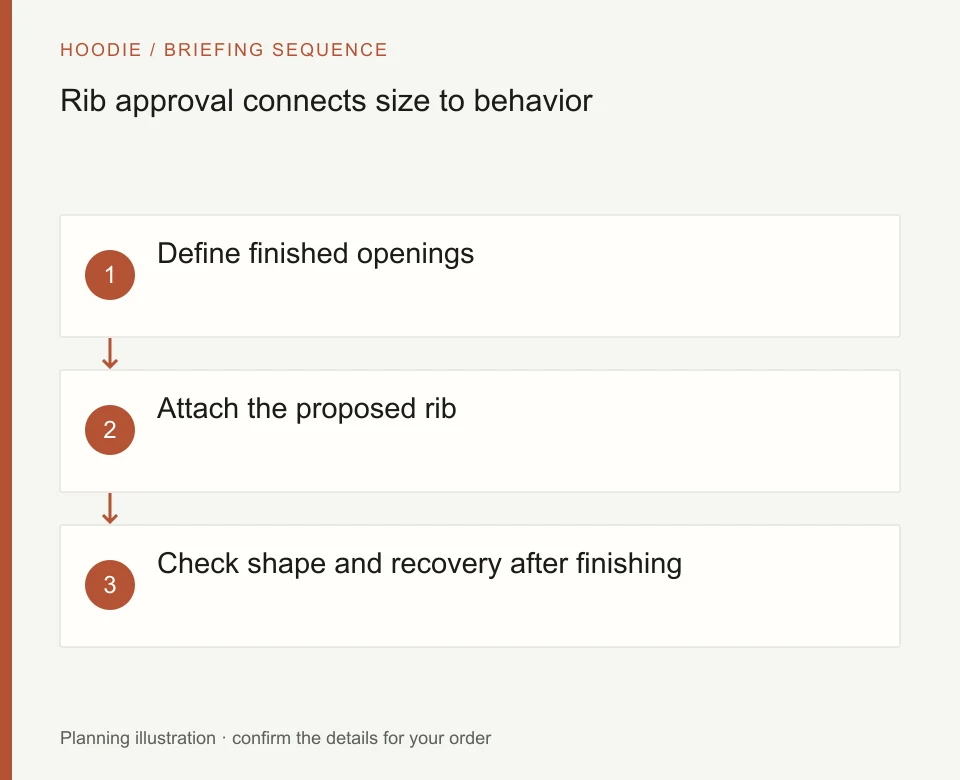
At a glance
Swipe the table sideways to compare both columns →
| Decision | What to specify | What to verify |
|---|---|---|
| Dimension | Finished depth and relaxed opening | State seam inclusion and measurement method. |
| Material | Rib structure and behavior beside the body | Do not infer recovery from composition alone. |
| Approval | Attached component after relevant finishing | Review shape, comfort and dimensional change together. |
Record the finished dimensions
Give the cuff depth and hem-rib depth as visible finished measurements, noting seam inclusion. Define relaxed opening width and any extended measurement required for review. Keep these separate from the cut rib dimensions used in construction. A supplier can propose the component pattern, but the buyer's chart should clearly describe the finished garment result being requested.
Explain the intended body shape at the hem. A relatively narrow opening can gather a wide hoodie body, while a more open hem can support a straighter fall. On a cropped style, rib depth also influences the visual balance of the short body. Review those relationships in the design reference rather than using a cuff specification copied from another silhouette.
Specify material and attachment together
Identify the proposed rib structure, composition, weight or physical reference alongside the body fabric. Stretch and recovery depend on more than fiber percentages, so compare actual samples. State whether a visual texture difference is intentional. A rib that matches the body shade may still feel too firm or too soft for the opening and shape you want.
Show the seam or attachment detail where it affects appearance and comfort. Inspect the join around cuffs and at side seams for unwanted bulk or distortion. If a cuff carries a label or embroidery, review how that addition changes flexibility. Do not assume the unbranded rib trial represents a cuff after a dense decoration or thick label has been attached.
Check recovery and finishing on the garment
Agree a repeatable opening and relaxation procedure, then record what happens to the cuff and hem. Compare the sample before and after any intended wash or other finish. Rib and body can respond differently, which may change gathering and length. Avoid promising no stretching out based solely on a rib name or a single informal pull at the sample table.
When a correction is needed, identify whether it concerns material, opening size, rib depth or attachment. Update the related body and sleeve measurements if the change affects total length. Retain the approved rib swatch and finished sample together. For reorders, compare the new rib submission with both references so the color match does not hide a change in handle or recovery.
Send these details together
- Separate cuff and hem-rib finished dimensions
- Relaxed and any agreed extended opening methods
- Rib and body physical material references
- Attachment, label and decoration details
- Agreed recovery review and post-finish observations
Use this checklist to prepare your own order brief. Materials, processes, acceptance criteria and any applicable product requirements need order-specific confirmation; this guide is not a test report or availability guarantee.
Prepare a quote briefThe RFQ form prepares a WhatsApp message for you to review. For files, email sales@hoodiemanufacturerchina.com.
Questions before sampling
What are your MOQ, sample time and bulk lead time?
MOQ is 100 pcs. Samples take 7 days. Bulk production lead time depends on order quantity.